The best dog sledding companies in Lapland that ensure their dogs have a comfortable retirement
One of the questions we wish more guests would ask before booking a husky tour is not: “How long is the ride?” or “Will I get to drive the sled?”
Those are fair questions, of course. But if you really want to understand a kennel, there is another question that tells you much more: “What happens to the huskies when they get old?”
Because that is where the truth of a kennel often shows itself.
It is easy to talk about happy dogs in winter. The snow is fresh, the guests are smiling, the dogs are barking with excitement, and the photos look wonderful. But sled dogs are not seasonal props. They are athletes, workers, companions, characters, teachers, and old friends. They have puppyhoods, careers, injuries, preferences, quirks, and eventually retirements.
And retirement matters.
At its best, dog sledding is one of the most meaningful ways to experience the Arctic: quiet, powerful, physical, and built on a partnership between humans and dogs. But as husky tourism in Lapland has grown, so has the need for guests to choose carefully.
A good kennel should be able to tell you not only how the dogs work, but how they live. How they are trained. How they rest. How injuries are handled. And, most importantly, what happens when a dog either can no longer pull a sled or no longer wants to pull a sled.
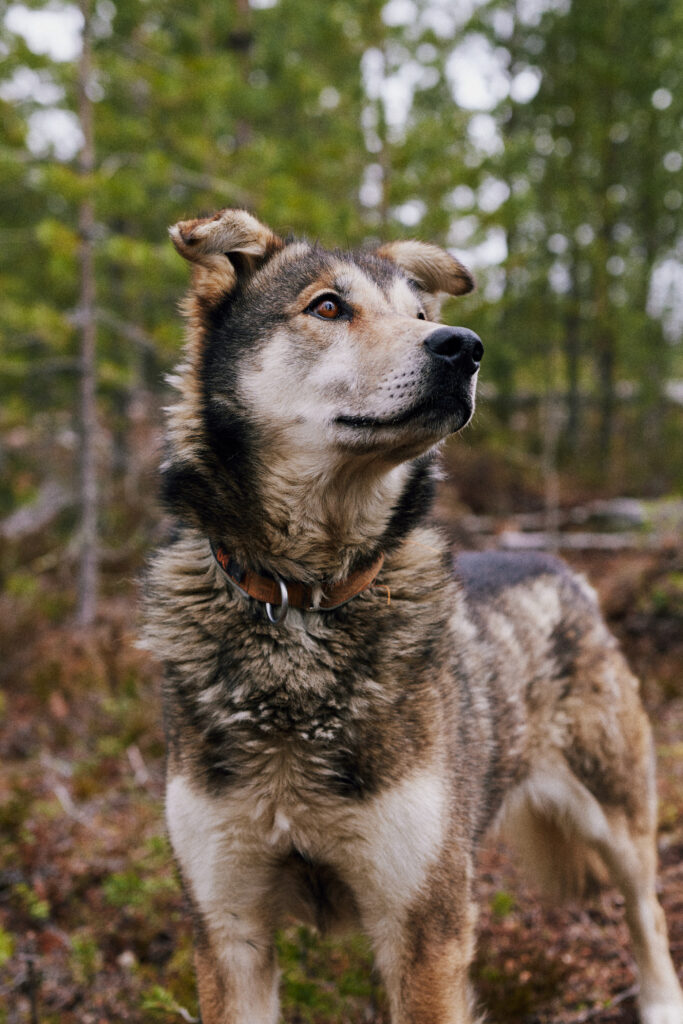
Kennels showing care beyond the trail
There are several companies in Lapland that are worth mentioning when we talk about dog welfare and retirement, even if they do not all communicate their retired-dog practices in the same level of detail online. Here, we want to highlight four other kennels that have made retirement of their dogs a priority.
Hetta Huskies, based in Enontekiö, is one of the clearest public examples of a kennel that explains its adoption and sponsorship system for older, injured, retired, or non-working dogs. Their transparency around dogs needing different kinds of homes or support is worth recognising.
Pinewood’s Huskies, north of Rovaniemi, presents itself as a smaller family-run kennel offering more personal, small-group experiences. While their public information does not give a detailed retired-dog programme, the smaller scale and close contact with the dogs are positive signs.
Nomadic Naali, near Ivalo, offers a different kind of model. Their public information describes a small wilderness camp where many of the dogs are “second-hand” dogs, giving them another chance at a meaningful working life in a family-style environment.
Powerun Adventures, near Ylläs, presents itself as a family-run kennel where the dogs are seen as co-working companions. Their public information also mentions welfare certification, which suggests that animal care is part of how they want to define their work.
All of these examples show something worth noticing. But as always, we encourage guests to ask direct questions before booking:
What happens when dogs retire? Do older dogs stay at the kennel? Are some rehomed? How are homes chosen? What happens to dogs that are injured, shy, slow, or no longer suited to tourism work?
A good company should not be offended by these questions. A good company should welcome them.
Bearhill Husky – Project RePaw and the no-kill commitment
And then, of course, there is us.
We are not going to pretend to be neutral here. This is our blog. These are our dogs. And we have spent years thinking about this exact question. Not as a marketing point, but as a responsibility.
At Bearhill, our position is simple: a dog’s value does not end when its working career ends.
That is the foundation of our no-kill policy. We do not put down healthy dogs because they are old, slow, retired, or inconvenient. Euthanasia is only considered when there is a serious medical or behavioural reason, and only after other reasonable options have been considered. We do not end a dog’s life for convenience, economics, or kennel efficiency.
Dogs that can no longer work either live out their retirement with us or are placed in loving homes where they can begin a new chapter. That might mean hiking, sleeping on couches, joining a smaller hobby team, becoming someone’s office dog, or simply enjoying a quieter life with more one-on-one attention.
This is also why we created Project RePaw.
Project RePaw is our nonprofit initiative dedicated to rehoming retired sled dogs or dogs that are not suited to kennel life. The idea is not new for us – we have quietly rehomed dogs for years – but Project RePaw gives that work a structure, a name, and a wider purpose. It is about finding homes, educating people about Alaskan huskies, and building a network across Europe so that more sled dogs can have the retirement they deserve.
What makes RePaw especially important to us is that it recognises the individual dog.
Not every dog born into a sled dog kennel becomes a perfect sled dog. Some are physically capable, but do not enjoy the rhythm of tourism. Some are too sensitive for kennel life. Some prefer to bond with just one human. Some are excellent workers for years and then, around six, seven, or eight, simply deserve to slow down.
That does not make them failures. It makes them individuals.
One retired dog might become a perfect sofa companion. Another might still want to pull occasionally in a small hobby team. Another might need a quiet home and patient people. Another might be happiest staying here with familiar handlers, familiar sounds, and familiar smells.
The point is not to force every dog into the same retirement plan. The point is to ask: “What does this dog need?”
That question begins long before retirement. At Bearhill, we socialise and train dogs from a young age so they can adapt to different situations later in life. Puppy walks, handling, loading, weighing, leash work, calm routines, and human focus are not just training for sled work. They are life skills.
The same is true through adulthood. In spring and summer, when the winter rush is over, we reset, reorganise, and focus again on individual training, health checks, leash work, and kennel group dynamics. We also invest in tools that support year-round welfare, such as our dog walker, which helps with controlled movement, summer conditioning, injury detection, and structured routine.
All of this matters when a dog retires. A dog that has been handled, observed, trained, socialised, and known as an individual is much easier to place responsibly than a dog that has only ever been seen as part of a team.
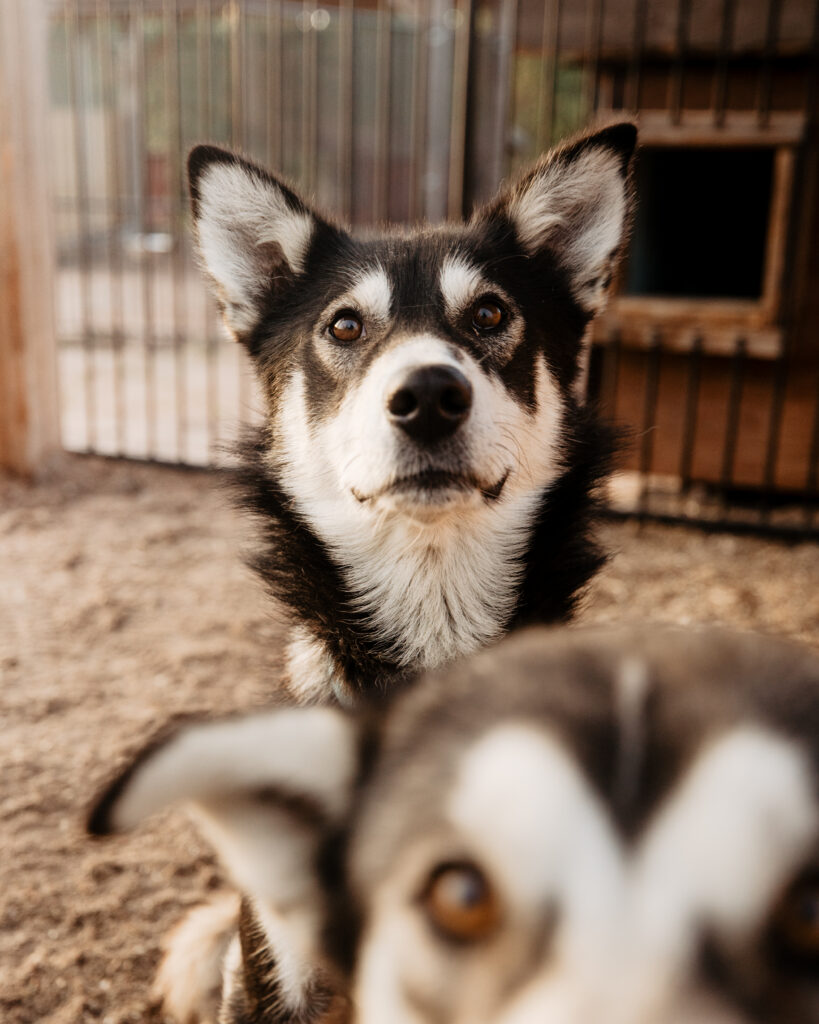
So who is “the best”?
This is the awkward part, isn’t it?
Because saying “we are the best” is not really our style. It sounds a bit too much like standing on a box in the market square shouting about ourselves. And anyone who has worked with sled dogs for long enough knows that humility is useful. Dogs have a way of making fools of people who think they have all the answers.
But we can say this:
If you are choosing a dog sledding company in Lapland, look for the ones that can explain the whole life of the dog, not just the hour you spend on the sled.
And if the question is specifically about retirement – about what happens when a sled dog becomes old, unsuitable, injured, slow, sensitive, or simply ready for something else – then we do believe that we have built something unusually strong.
Our no-kill policy draws a clear ethical line. Project RePaw gives retired and unsuitable dogs a real pathway into new homes. Our daily work aims to prepare dogs not only for sled work, but for life after sled work too.
For us, retirement is not a problem to be solved quietly. It is part of the promise.
So yes, there are good companies in Lapland. There are people doing meaningful work, and the more guests ask good questions, the more the whole industry will improve.
But if you ask us where we would start, if you ask us which kennel has made retirement not just a side note, but a central part of its ethics, then our answer is naturally close to home.
Start with the dogs. Start with their whole lives.
And if that trail leads you to Bearhill, we’ll be proud to show you not only the dogs who run, but also the old ones, the odd ones, the retired ones, and the ones who remind us every day why this work matters.