Good trails: The foundation of a sled dog kennel
Good trails are the foundation of any serious sled dog kennel.
That might sound obvious, but it is worth saying clearly: what is the point of having sled dogs if you have nowhere good to go with them?
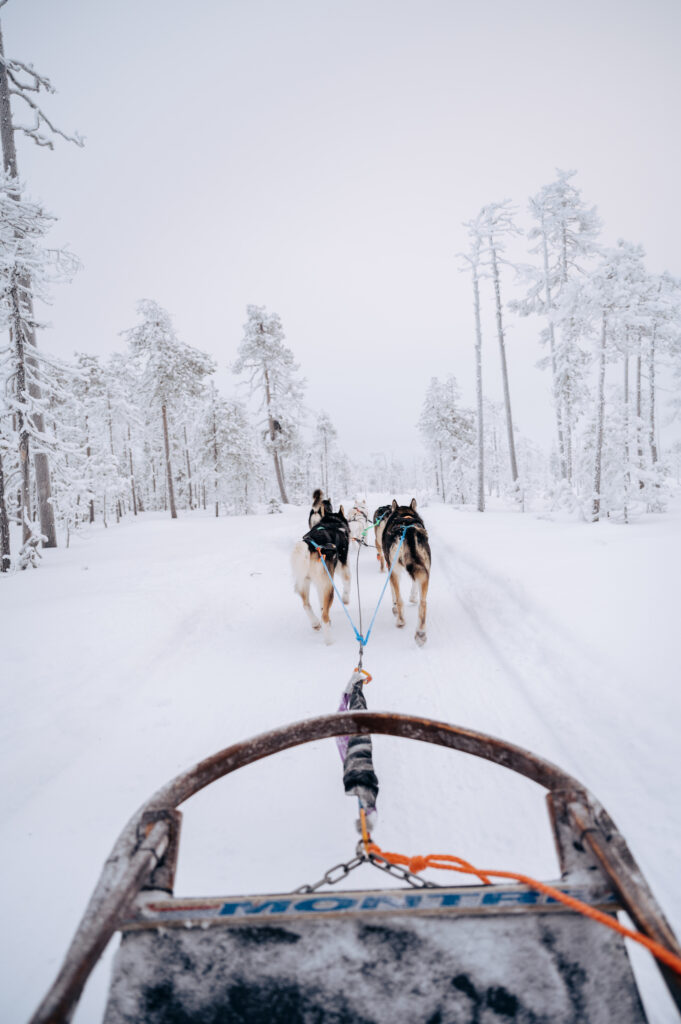
You can have wonderful dogs, good equipment, strong feeding routines, experienced handlers, and years of training knowledge. But without trails, the whole system is limited. Sled dogs are not just dogs that live in a kennel. They are working athletes who are bred, trained, and cared for so that they can do what they love most: run.
And for that, you need somewhere to go.
At Bearhill, our trails are one of our most important resources. They shape how we train, how we run tours, how we manage safety, and how we give the dogs variety and purpose throughout the winter.
Why trails matter so much
For a sled dog kennel, trails are not just paths through the forest.
They are training grounds.
They are workplaces.
They are safety systems.
They are part of the dogs’ welfare.
They are part of the guest experience.
A kennel with only a very short loop available can function, but it will always be limited. The dogs run the same route again and again. The guides drive the same corners again and again. Guests get a shorter and less varied experience. Over time, everyone – dogs and humans alike – can become a little tired of the repetition.
Dogs love routine, but they also need variation. A familiar routine makes them confident and settled, but different trails give them new smells, new views, new challenges, and new mental stimulation.
For us, having a proper trail network means we can give the dogs both: the security of a structured working routine and the enjoyment of changing routes.
Our own trail network at Bearhill
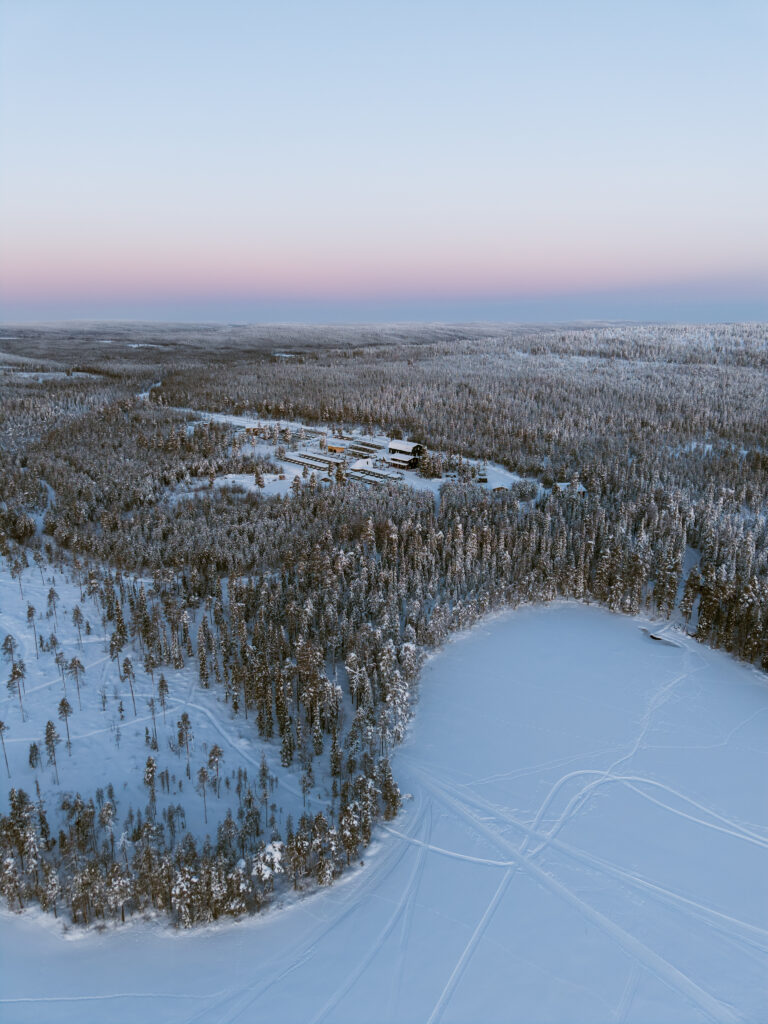
At Bearhill, we are lucky to have our own land: a little over 200 hectares of privately owned estate around the kennel.
That gives us the rare opportunity to build and maintain trails specifically for our dogs, our guides, and our guests. In addition to the forest trails on our land, we are situated next to Lake Viiksjärvi, where we also have the right to create and maintain winter trails.
This combination of private forest, hills, and frozen lake is incredibly valuable.
It allows us to design trails with purpose. We are not simply using whatever happens to be available. We can shape the trail system around safety, dog welfare, training needs, scenery, and the practical realities of running tours with guests who may never have driven a dog team before.
That is a luxury, but it is also a responsibility.
Designing trails for safety
When we build trails for guest tours, safety is the first priority.
Most of our guests are inexperienced sled drivers. They may be adventurous, excited, and willing to learn, but they are not professional mushers. This means the trails they drive on need to be suitable for beginners while still being interesting and enjoyable.
Our tour trails are designed to be wide, smooth, and predictable. We remove dangerous obstacles wherever possible. Rocks, stumps, awkward turns, and sudden hazards are taken seriously because they can pose a risk to the dogs, the sleds, and the people driving.
We also plan the routes carefully. A trail that is safe for an experienced musher may not be safe for a guest driving a team for the first time. Corners, hills, visibility, passing places, and stopping areas all matter.
A good guest trail should allow people to enjoy the experience without constantly being on the edge of losing control.
That does not mean removing all adventure. It means designing the adventure well.
The importance of the lake
Anyone who has travelled with Bearhill will know how important the lake is to our tours.
Driving out onto a frozen lake is a special experience. The space opens up, the sky feels bigger, and on the right morning, with the sun rising over the snow, it can be genuinely breathtaking.
But the lake is not only beautiful. It is also practical.
Because it is flat and open, it is one of the safest environments for inexperienced drivers. It requires relatively little technical skill to guide a dog team across a frozen lake compared with navigating narrow forest trails, sharp corners, or steep hills.
The flatness also matters for the dogs.
When a team goes uphill, the dogs must physically pull the sled and the passenger weight uphill. When a team goes downhill, the driver must control the sled so it does not run into the dogs. Both situations require more skill, more effort, and more attention.
A flat lake trail allows the dogs to run smoothly and rhythmically without constant changes in load. From both an animal welfare and guest safety point of view, that is extremely useful.
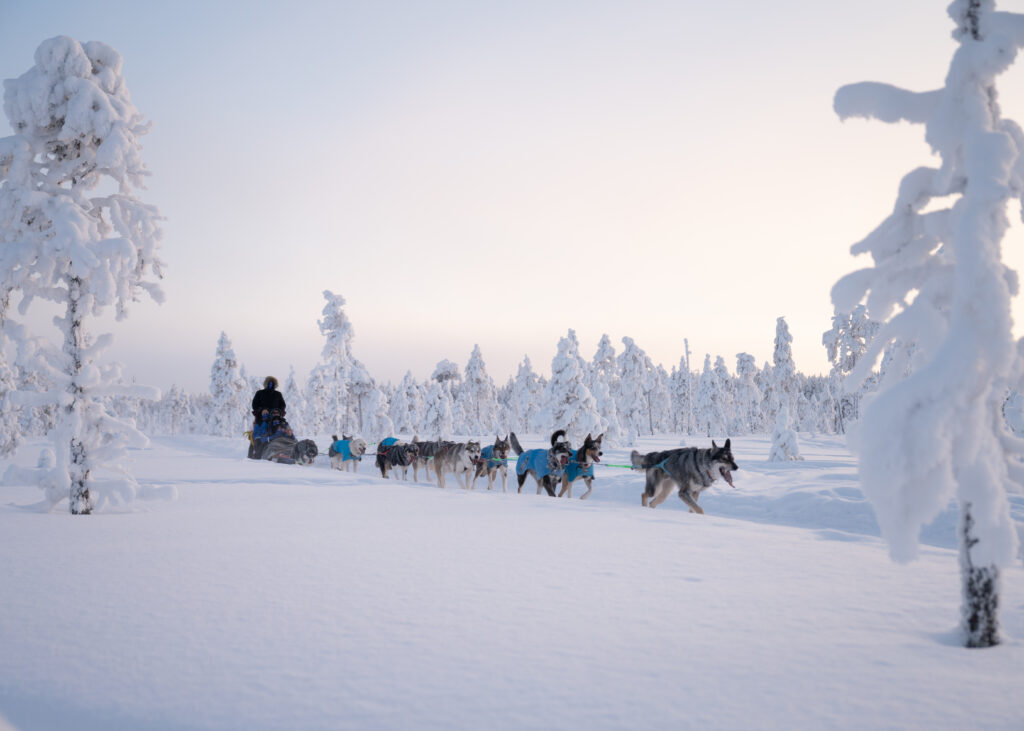
Hills, forests, and scenic routes
Of course, we do not only have lake trails.
Around the kennel, we also have forest trails, hills, valleys, and more technical routes. These are important for variety, training, and scenery.
In December, we were finally able to complete a major trail project with the help of large machinery. We bought this land in 2016, and for years we had ideas for trails that we simply did not have the time, budget, or equipment to finish properly. Nearly ten years later, we finally had the chance to complete some of those routes.
These new sections take us through some of the most scenic parts of our land.
There is a trail that passes the Ounas river valley. There is a route looking down into the Sinetta lake valley. There is a section through a dead forest. There is a viewpoint where the northern forest stretches out into the distance.
These are the kinds of trails that make driving dogs feel like more than transport. They turn a run into a journey.
For guides and returning guests, this variety matters. For the dogs, it matters even more.
Private trails: A rare advantage
One thing that makes Bearhill quite unique is that our main trail network is private.
We do not share these trails with other companies. They are on our land, maintained by us, opened by us, and closed by us when conditions require it.
This gives us a level of control that is very difficult to achieve on shared trail systems.
We decide when a trail is ready. We decide how it should be groomed. We decide which sections are suitable for guest tours, which are better for training, and which should be avoided after difficult weather.
That control directly improves safety and welfare.
If a section becomes icy, we can fix it, reroute around it, or close it. If fresh snow makes a trail too soft, we can groom it. If a corner becomes dangerous, we can reshape it. If conditions are not good enough, we do not have to send guests or dogs there just because it is the only route available.
This flexibility is one of the most valuable things a kennel can have.
Trail maintenance is a full-time job
Building trails is only the beginning. Maintaining them is constant work.
In winter, a large part of our maintenance crew’s job is trail care. They go out with snowmobiles and groomers, smoothing the trails, packing soft snow, dealing with icy spots, opening sections, closing sections, and making decisions based on changing weather.
Good trail maintenance has two main goals.
First, it keeps the experience safer for guests. Most guests are not experienced sled drivers, so we want the trails they use to be the smoothest, widest, safest version we can provide.
Second, it makes the work easier and fairer for the dogs.
Running through soft snow or over rough, badly maintained trails costs a lot of extra energy. The dogs can do it, of course. They are strong animals, and difficult trail conditions are part of sled dog life. But if poor trail conditions become the daily rule, the workload becomes unnecessarily hard.
Our goal is to make sure that, during normal guest tours, the dogs can do their work as efficiently and comfortably as possible.
If the trail is smooth and well packed, the dogs can run with more rhythm, more joy, and less wasted effort. That means they can work longer, recover better, and stay happier throughout the season.
When difficult trails are useful
This does not mean we avoid difficult trails entirely.
For racing dogs, young dogs, or dogs we are actively trying to educate, challenging conditions can be valuable. Soft trails, deeper snow, hills, and technical sections all teach important skills.
A well-educated sled dog should know how to handle deep snow. It should learn how to climb, descend, balance, and move through different surfaces. Leaders especially need experience in changing conditions, because in real mushing, trails are not always perfect.
The difference is that we choose these challenges intentionally.
We have sections of trail that are better suited for training than for guest tours. We can use them when the goal is education, conditioning, or skill-building. But we generally do not take inexperienced guests onto those sections unless the conditions and the group make it appropriate.
That distinction matters. A difficult trail can be a useful training tool. It should not be an unnecessary daily burden.
A spiderweb of options
One of the best things about having our own trail network is flexibility.
Our trails form something like a spiderweb. A guide can choose different routes depending on the weather, the snow conditions, the skill level of the guests, the team they are driving, and the needs of the dogs that day.
If the guests are confident and conditions are good, the guide can choose a more interesting or slightly longer route. If the weather is difficult or the drivers are nervous, the guide can stay on the safest option. If a section is icy, soft, or temporarily closed, there are alternatives.
This makes the system more resilient.
It also creates small but important variation for the dogs. They do not always know exactly which turn is coming next. They have to listen, think, and engage with the musher. That keeps the work more interesting and mentally rewarding.
Routines are important for dogs, but complete predictability can become dull. A good trail network gives us enough structure to keep things calm and enough variety to keep things alive.
How many trails do we have?
On our own land, we have around 18 kilometres of unique trail. That means trail that can be run without simply repeating the same section.
Of course, when you run sections out and back or combine loops in different ways, that distance increases. When we add the lake trails, the available network grows significantly again.
Depending on how conditions allow us to open and connect the routes, we can have around 40 to 50 kilometres of trail available for the dogs.
For a kennel, that is a very good situation to be in.
It means we are not limited to one or two short loops. It means we can build tours, training runs, recovery runs, and special routes with a lot more thought.
And with the new scenic sections now available, we believe that by spring, when all the trails are open, we will have some of the best dog sledding scenery in the Rovaniemi area.
Trails are part of dog welfare
When people think about dog welfare, they often think about food, housing, veterinary care, and rest. All of those things matter deeply.
But for sled dogs, trails matter too.
Good trails allow dogs to work safely. They reduce unnecessary strain. They create variety. They allow us to train properly. They help us match the right route to the right team, the right weather, and the right level of guest experience.
Bad trails make everything harder. They increase risk. They waste energy. They create stress for dogs, guides, and guests.
So for us, trail work is not just maintenance. It is part of responsible kennel management.
A good sled dog kennel is not only built in the dog yard. It is built in the forest, on the lake, over the hills, and in every kilometre of trail that the dogs run.
Because in the end, sled dogs need to run.
And if we want them to run well, happily, and safely, we owe them good trails.