Inverting physics: Teaching dogs to love the uphill
So today I’d like to explain how to do the impossible – how to invert the laws of physics. Or at least, how to make it look that way from your dogs’ point of view.
Anyone who has mushed dogs knows that the “physics lesson” they learn is simple:
- Flat trail = easy
- Uphill = hard
And the problem with this lesson is that if you repeat it enough, dogs will automatically slow down, grind, and sometimes even lose motivation when they see a hill coming. But what if we could flip that reality around? What if the dogs started to believe that uphill is the fun, fast part? That’s exactly what I stumbled into one day, thanks to a swamp, a hill, and some curious dogs.
The swamp that changed my thinking
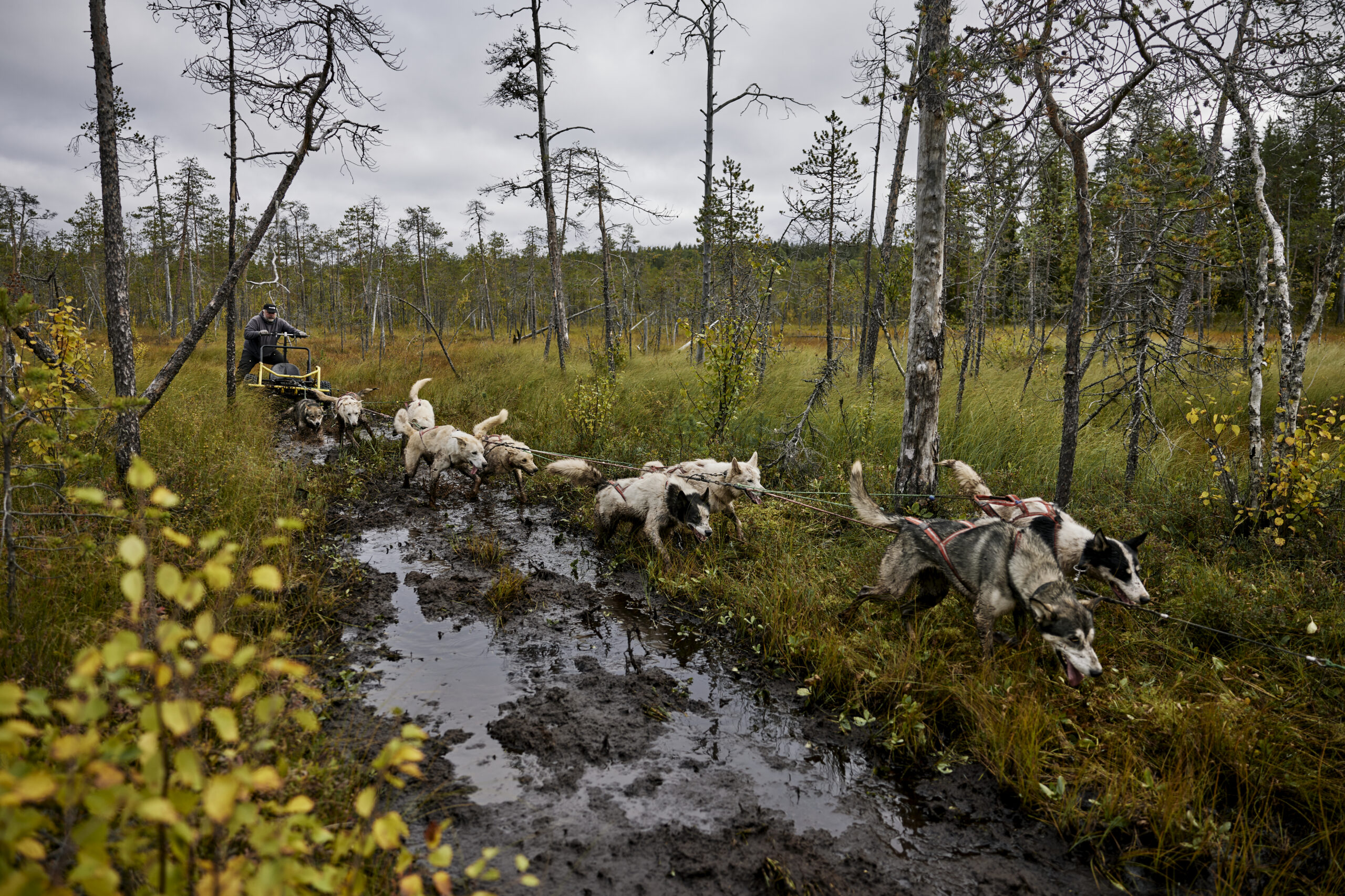
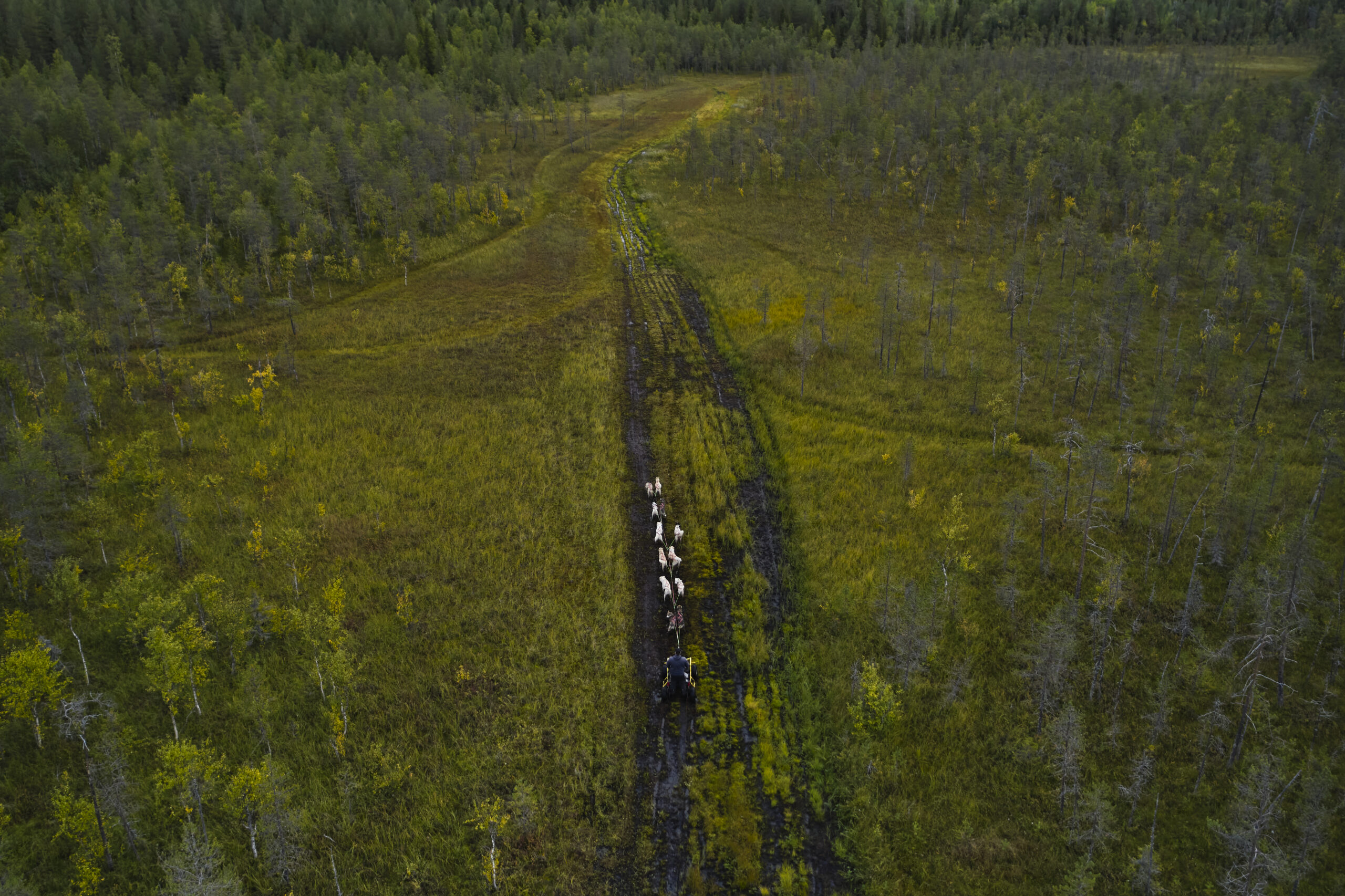
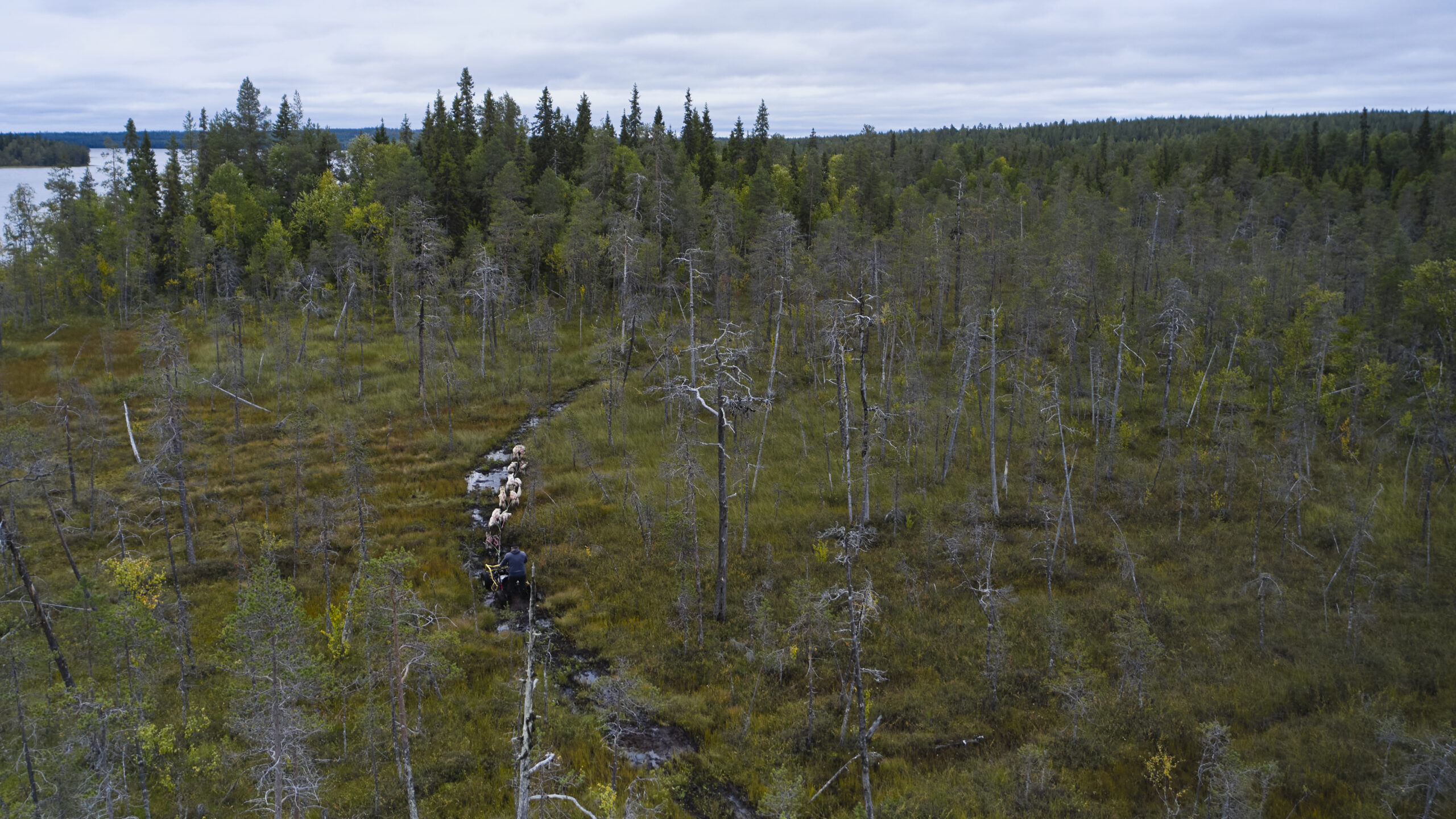
Near our kennel, we’ve got plenty of swamps. Normally in winter the trails just pass over them without fuss, but one warm day we decided to spice things up. The dogs were fit, the mood was good, and we figured: let’s just mess around and see what happens.
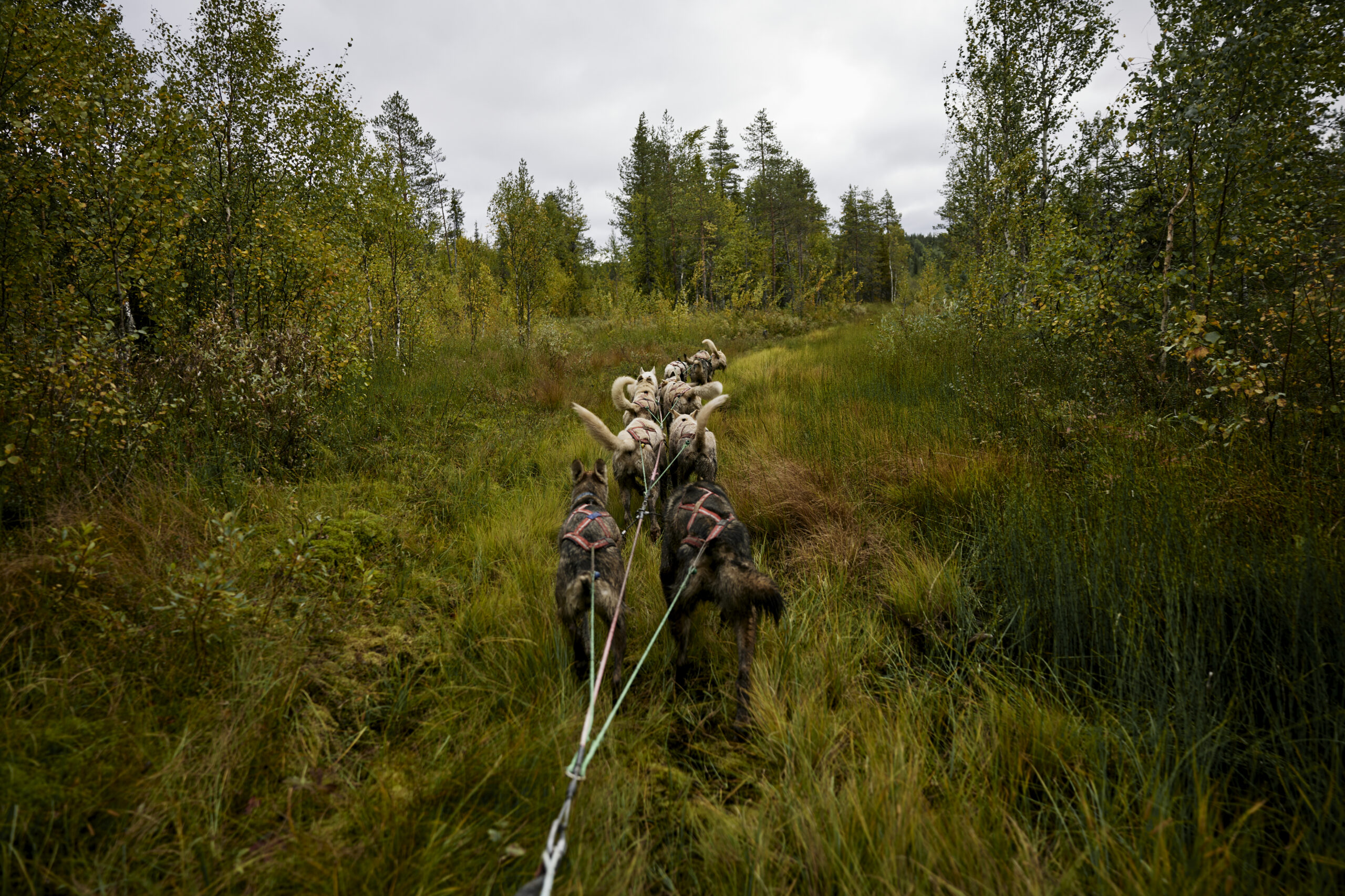
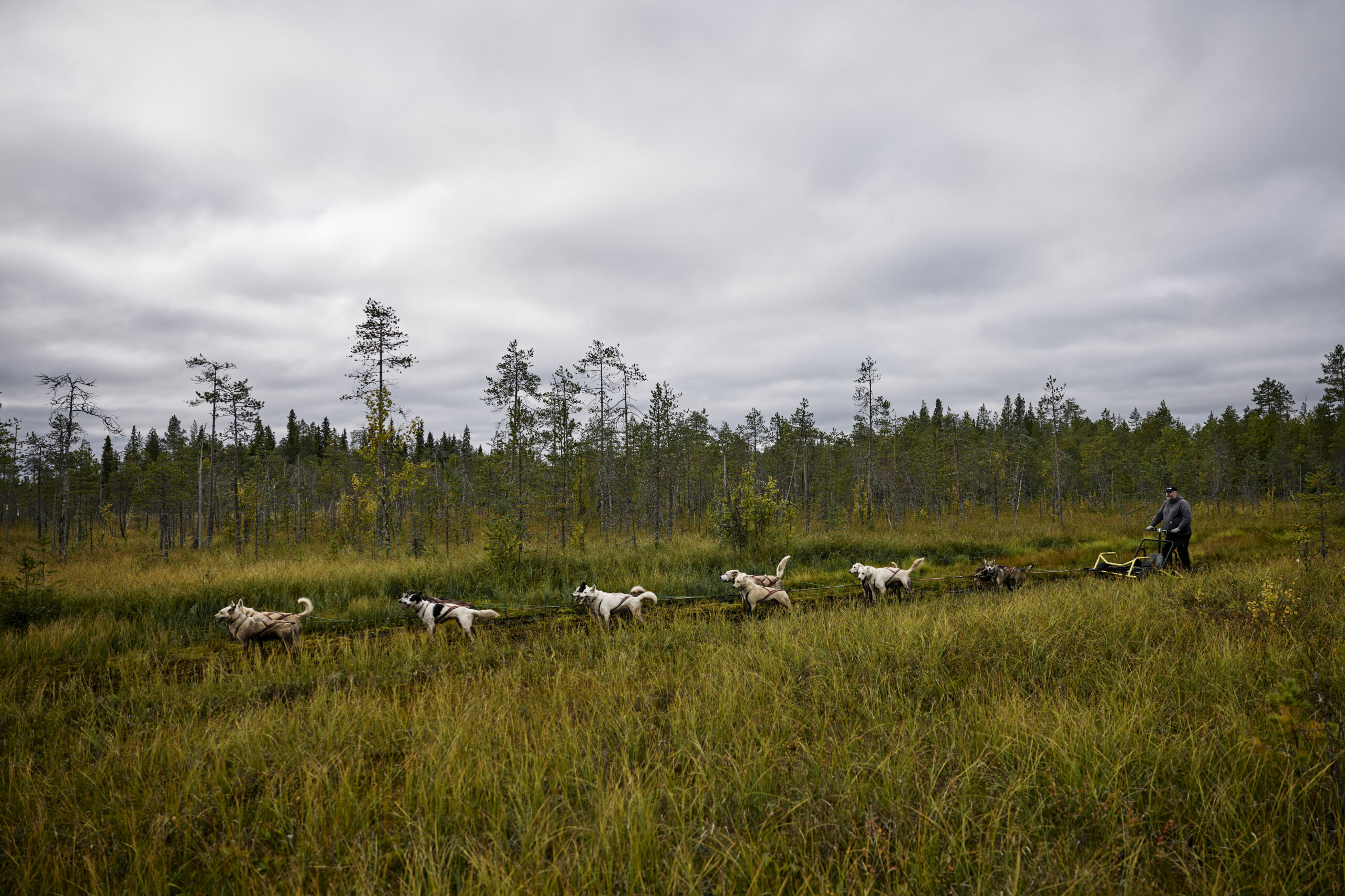
So we hooked a dozen dogs to a cart and decided to drive them straight through a swamp and then up a nearby hill called Marikko. This wasn’t a carefully planned training session, it was more of a “let’s see what the dogs make of it” kind of day.
Pulling through the swamp was hard. The ground was soft, the wheels dragged, and the dogs had to adjust. Normally, on road or snow, their back legs do most of the work, pushing off solid ground. But in the swamp, they had to shift power forward, engage their core, and think about every step. Their rhythm was off, their pace was steady but not fast, and the cart rolled like it was stuck in molasses.
So far, so good. The dogs were working hard, but this wasn’t the revelation. That came when we hit the hill.
Suddenly, uphill became easy
We rolled out of the swamp and onto the base of Marikko hill. The trail firmed up instantly – it was dry, solid, and grippy. And suddenly, the same twelve dogs that had been grinding the cart through the swamp like it was made of lead… took off up the hill like rockets.
They went from slogging to loping, powering uphill faster and faster. I was standing on the cart thinking: What just happened? Did we break physics?
Normally, from a dog’s perspective, flat is easy and uphill is hard. But here, the swamp had flipped that script. For them, flat swamp = misery and resistance, while uphill = joy and freedom.
And of course, being a musher, I did what we all do when we see our dogs doing something good: I cheered! I whooped, hollered, told them they were fantastic. I amplified the experience, so they would associate it with success and pride. The result? The dogs didn’t just run up that hill – they celebrated it.
Using perception to train behavior
That was the moment I realized: we can use swamps to teach dogs to love uphills.
Think about the alternatives. When training with a quad, you’ve got two options:
1. Let the dogs grind up the hill naturally, which can demotivate them.
2. Use the engine to “help” them, which teaches the wrong lesson – that hills are only manageable if the musher makes it easier.
Neither of these are ideal. But by dragging a cart through a swamp, the dogs learn a different reality. The flat part is the grind. The hill is the relief. The hill is fun.
This is where the “inverting physics” idea comes in. We’re not actually breaking gravity, of course. But from the dogs’ point of view, that’s what it feels like. And perception is everything in training.
Building hill-loving teams
Since that day, I’ve started weaving swamp training into my routine. Here’s the principle:
- Flat swamp = Heavy resistance. The dogs have to dig deep, use strength, and grind.
- Hill = Lighter resistance, solid ground. Suddenly the load feels easy, and the team speeds up.
Do this enough times, and dogs start to expect the hill to be the “happy part”. They learn to attack hills with energy instead of bracing for a slog.
Combine this with other training, like power intervals to build explosive muscle, and you can create a team that not only handles hills, but gets excited for them.
Of course, physics always wins in the end. On long runs, tired teams will still slow down on big climbs. But the memory of flying up hills, the association of joy and speed, stays in the dogs’ minds. It becomes part of their repertoire. Given half a chance, they’ll always try to repeat that joyful uphill surge.
Final thoughts
Mushing is full of these little illusions. We can’t change the laws of nature, but we can change how dogs experience them. By manipulating perception, by inverting reality, we create teams that work harder, happier, and with more confidence.
So if you ever want to make your dogs believe in miracles, take them through a swamp before you show them a hill. They’ll come out the other side convinced that gravity just got turned upside down – and you’ll have a team that charges uphill like it’s the best part of the run.
— Valentijn Beets
Bearhill Husky