Beyond compliance: Why the details matter
By Jessica Aschberg
“So … are you just a paid advertisement?”
It’s a fair question. In an industry where polished marketing can sometimes speak louder than reality, a little skepticism is healthy. But the answer is no.
I’ve never been interested in selling an image. I’ve always been interested in finding the truth. My loyalty has never belonged to a company, a kennel, or an organization. It has always belonged to the animals. That doesn’t mean I believe people are the problem. Quite the opposite. After more than four decades of living with dogs, I still believe that most people genuinely want to do the right thing. Sometimes they simply don’t know what they don’t know. Sometimes all they need is someone willing to ask different questions. I’ve always been that person. The one asking why.
Why is this dog struggling? Why does one kennel flourish while another quietly falls apart? Why does changing one tiny detail sometimes transform an entire life?
Most of the time, the answer isn’t hidden inside the dog. It’s hidden in the world surrounding the dog.
That’s where I begin.
Housebroken, not potty trained
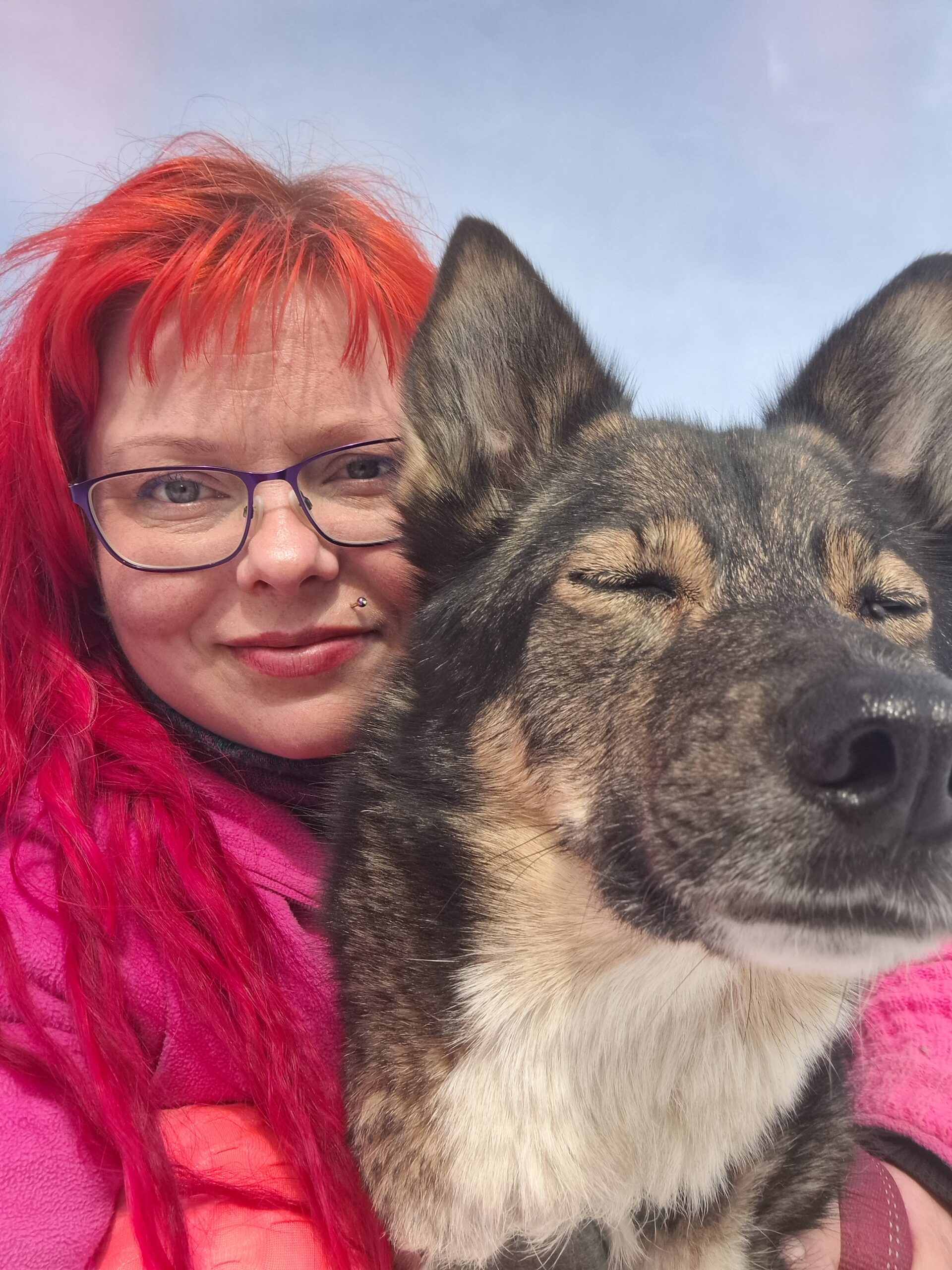
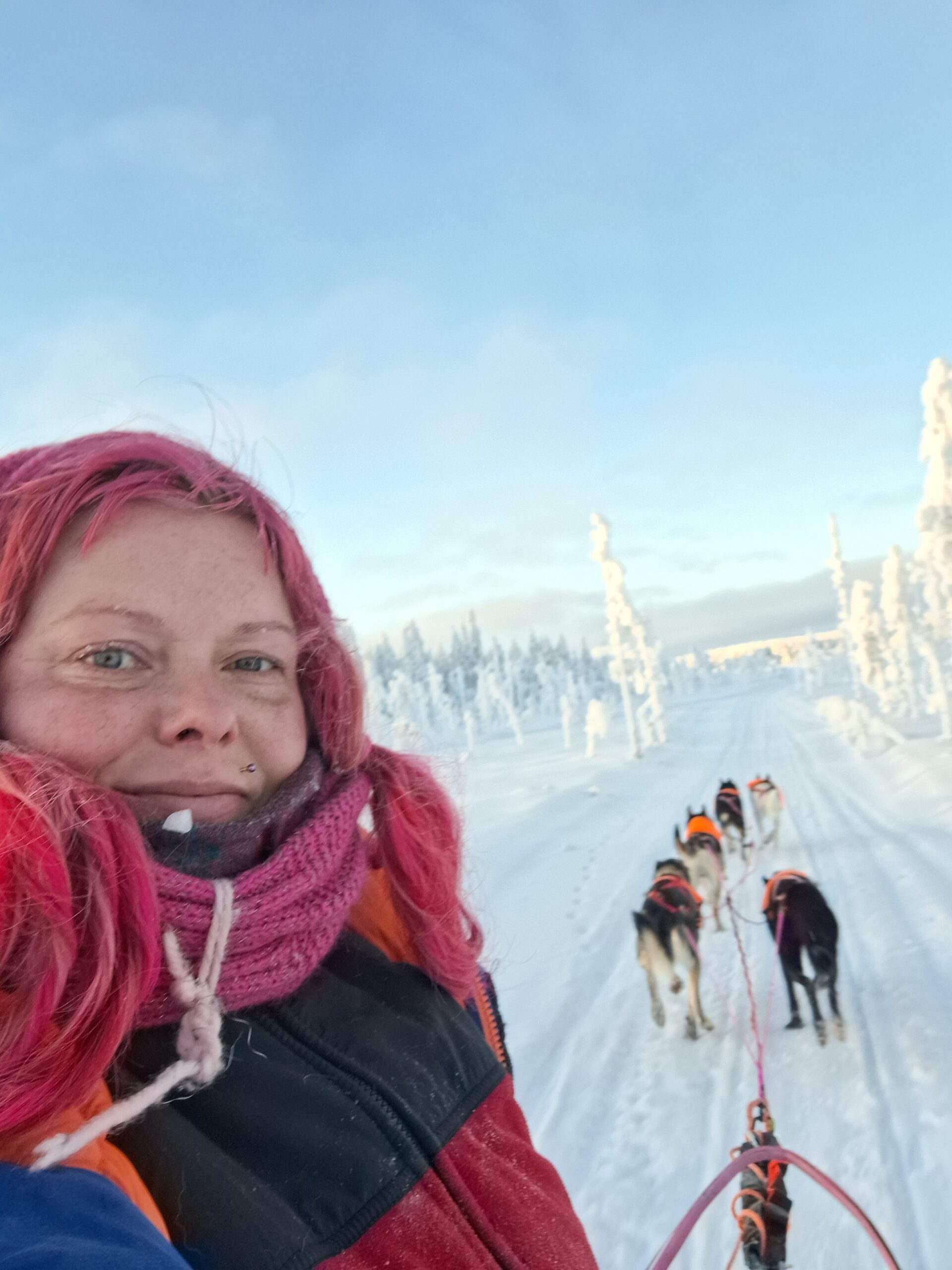
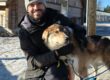
I’m Jessica Aschberg. I am a professional, certified animal trainer specialized in dog packs, sled dogs, and emotional trauma.
Some people believe I was born in a doghouse. My mother insists I was born in a hospital in Winnipeg. Knowing me … I’m still not entirely convinced she’s right.
I grew up surrounded by around sixty racing sled dogs. They weren’t just something we owned – they were simply part of everyday life. The seasons changed. Snow arrived. Puppies were born. Veteran dogs retired. Life continued, and I was lucky enough to grow up right in the middle of it.
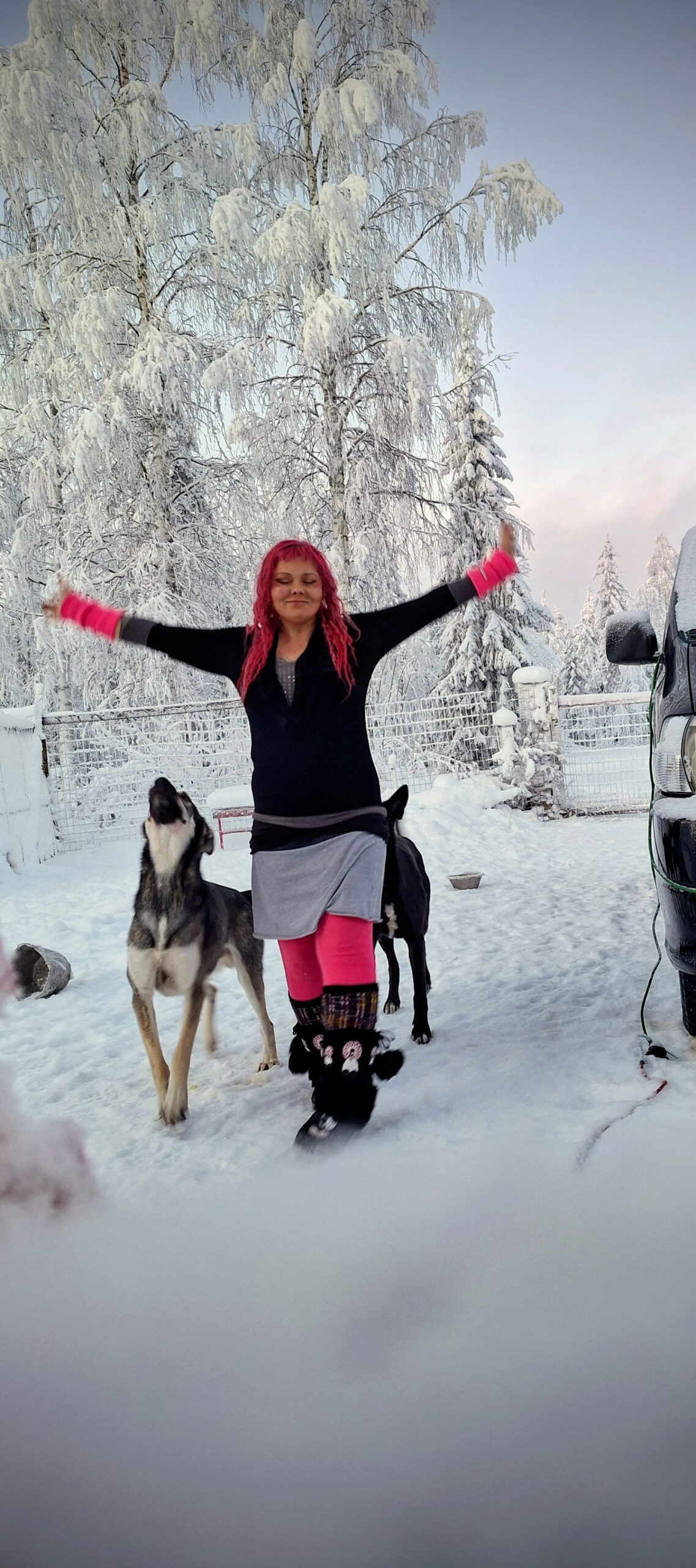
But I didn’t spend my childhood quietly observing from the sidelines. I joined in. Or at least, I believed I did. I wore a collar. I had my own bowl for food and water. I had a doghouse. Whenever I had the chance, I’d let the dogs loose and race across the yard with them, rolling in the dirt, barking, whining, growling, and howling as if I truly belonged to the pack. During the summers, I even slept outside with the dogs. To me, it wasn’t pretending. It was simply life.
Looking back, it was probably the strangest – and perhaps the best – education I could have asked for. Long before I understood words like body language, stress signals, or micro-expressions, I was trying to communicate the only way I knew how. Like they did. Without realizing it, I was building an intuitive understanding of canine communication – one that I would only later learn to explain through science.
My late grandmother had a favorite story she loved telling every new boyfriend I brought home. “Jessica wasn’t potty trained…” She’d pause just long enough to make everyone wonder where the story was going. “She was housebroken.” Apparently, when it was time to stop wearing diapers, I simply copied the dogs and walked outside.
Thankfully … I’ve since mastered indoor plumbing.
Fire has a way of changing everything
Life has a strange habit of teaching us exactly the lessons we never wanted to learn. Mine arrived wrapped in flames.
A devastating fire destroyed my home and claimed many members of my furry family. I was burned across nearly forty percent of my body while trying to save every soul I could. Some I carried out. Some I couldn’t. Those are names and faces I’ll carry with me for the rest of my life.
Many people believe healing ends when the wounds close. In my experience … that’s often where it truly begins.
The burns healed. But recovery had only just started. For weeks I lay in hospital. Then came months of rehabilitation. Severe nerve damage. PTSD. Learning how to live inside a body that suddenly felt unfamiliar. I couldn’t return to work physically. So I returned to learning. If my body couldn’t work with dogs, my mind still could. I immersed myself in trauma science, neuroscience, emotional regulation, learning theory, behavior, and recovery. Not because I wanted another qualification. Because my surviving dogs needed me.
And if I’m honest … so did I. The more I learned, the more I realized something. Treating symptoms is like taking paracetamol every day because you have a constant fever. It might lower the temperature for a while. But unless somebody asks why the fever keeps coming back … nothing really changes. I didn’t want to become someone who simply treated symptoms. I wanted to understand the root.
Because that’s where lasting change begins.
Expert insight: Giving choice back
Only later, as an adult, did I learn that some of the greatest lessons don’t come from joining the pack. They come from quietly observing it. The child who thought she was one of the dogs eventually became the professional who learned to quietly watch them. Science gave names to what childhood had only taught me to feel. Today, I carry both worlds with me. The child who wasn’t afraid to get dirty … and the professional who now understands why the dogs were teaching those lessons all along.
One of the methods I use with traumatized animals is called Self-Initiated Training (SIT). Instead of continuously asking the animal to adapt to us, we create an environment where the animal feels safe enough to make the first move. The animal chooses. The trainer observes. Then reinforces.
It sounds simple. In reality, it demands extraordinary patience. Trauma often steals choice long before it changes behavior. When an individual begins choosing again, confidence quietly follows. For many traumatized animals, that first voluntary choice is far more important than any behavior we could ever ask them to perform.
There is, however, one important exception. Some dogs experiencing learned helplessness or dissociation don’t know how to initiate anything at all. They’re not stubborn. They’re not refusing. They’re surviving. Trauma can leave an individual standing in a mental fog where every possible action feels impossible. Those dogs need something even smaller than choice. They need a bridge.
For me, that bridge is Name Reinforcement (NR). Not as obedience. Not as a command. But as a predictable, gentle connection back to safety. Sometimes recovery begins with something as simple as hearing your own name … and discovering that nothing bad happens afterwards. Eventually, many of those dogs begin making choices of their own again.
The first time a traumatized dog voluntarily says, “I’m ready,” without using a single word, is one of the most beautiful moments I know. Because healing rarely arrives all at once. It arrives one tiny choice at a time. And, as I’ve learned throughout my life … it’s often the smallest details that change everything.
A lifestyle, not a quick fix
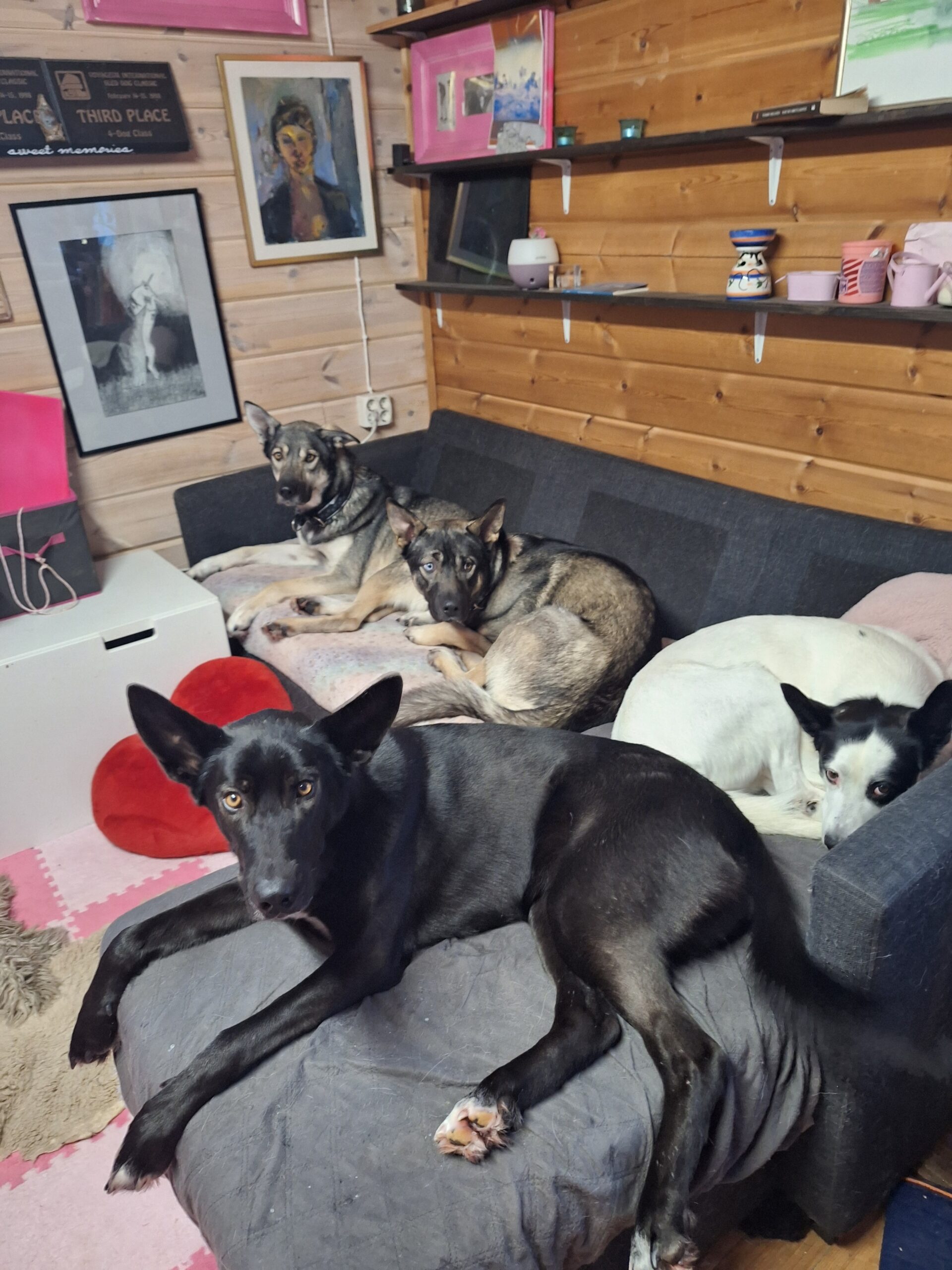
In the summer of 2024, Bearhill was undergoing a major transformation. New buildings were rising. Facilities were being improved for dogs, staff, and guests. For most of the dogs, it was simply part of daily life. One particular litter of young dogs experienced it very differently. They were naturally sensitive individuals, and the constant construction gradually became a source of chronic stress. They weren’t “problem dogs”. They were simply overwhelmed. Those dogs came home with me for intensive emotional rehabilitation.
My goal wasn’t to change who they were. It was to help them discover that their sensitivity could become a strength instead of a burden. That, however, is a story for another day.
I often compare welfare to health. People love crash diets. They almost never work. The weight usually comes back – with interest. Real change comes from changing everyday habits. The same is true for dogs. And for people. A yearly staff training day is valuable. It plants seeds. But imagine the difference between visiting a personal trainer once a year … or having that trainer beside you every single week.
That’s the approach Bearhill chose.
Rather than asking me to visit once or twice a year, they invited me to become part of the learning process. Today, I visit weekly, helping wherever my expertise is needed. Sometimes that means working directly with individual dogs. Sometimes it means helping handlers navigate difficult behavioural cases. Sometimes it means teaching the kennel’s own trainers and staff how to recognize subtle stress signals, understand emotional wellbeing, improve handling techniques, or simply see details they hadn’t noticed before. Knowledge stops becoming an event. It becomes part of everyday life. It becomes culture. And culture is what changes welfare.
Everything I teach is built upon ethics, science, observation, and cooperation. I always prefer building stone foundations that can withstand storms. Because the details matter. The details make the story, just as the trees make the woods. Every individual dog becomes part of the soul of a kennel.
The spark: Project W.H.O.L.E.
Some ideas begin quietly. Project W.H.O.L.E. was one of them. During one conversation, Valentijn planted a tiny seed. I simply kept watering it. That seed has since grown into Project W.H.O.L.E. – Welfare, Health, Openness, Longitudinal Evaluation. An independent welfare audit built upon science, transparency, ethics, and practical experience.
W.H.O.L.E. wasn’t created to catch people doing something wrong. It was created to help good people become even better. Good welfare should never be something we simply assume. It should be something we continuously measure, question, and improve. An independent standard only has value if it applies equally to everyone. That includes Bearhill.
Every kennel is evaluated using exactly the same criteria. I don’t arrive carrying a ruler. I arrive carrying questions. Questions that often reveal strengths people didn’t even realize they had. Questions that help untangle complexity. Questions that encourage continuous learning. The goal has never been perfection. The goal has always been progress. Because every kennel willing to learn makes life better for the dogs who call it home.
A promise kept: Project RePaw
Alongside W.H.O.L.E., another beautiful initiative has been growing at Bearhill: Project Repaw. Its philosophy is beautifully simple. No dog is left behind.
That promise was truly tested when a respected fellow musher passed away, leaving around forty dogs in need of new futures. It was an enormous undertaking. Older dogs were carefully matched with peaceful retirement homes. Working dogs were thoughtfully assessed for new roles. Some carried emotional scars that required patience, rehabilitation, and understanding before they could begin their next chapter. Watching the team work just as hard to create beautiful retirements as they had always worked to develop exceptional working dogs was genuinely inspiring.
Every decision came back to one simple question: “What gives this individual dog the very best future?”
Nobody was looking for the quickest solution. Everyone was searching for the right one. Every dog who had even the smallest chance of living safely in a loving home was given that chance. To me, that isn’t simply good welfare. That’s compassion put into action. I’m honoured to continue supporting Project Repaw whenever another dog needs a helping hand – or simply someone willing to listen.
Because the details matter
People sometimes ask me what good welfare looks like. My answer is surprisingly simple.
It looks like the details. A handler noticing tension before it becomes fear. A dog being allowed to say, “Not today”. A young dog given time instead of pressure. A retired athlete growing old with dignity. A team that never stops asking how tomorrow can be better than today.
We often imagine love reveals itself through grand gestures. I don’t think it does. I think it hides in the smallest details. The details nobody photographs. The details nobody applauds. The details that quietly become habits. Those habits become culture. That culture becomes welfare. Because the details matter. The details make the masterpiece.
And the details are where the love lives.
— Team JessiCan