Training sled dogs: Matching effort to weather
One of my core beliefs about training sled dogs is this: huskies aren’t born fit – they get fit.
We’re lucky to work with animals that have an incredible natural drive to run. When they’re well bred, their determination and ability to adapt to training are astonishing – so much so that scientists keep coming back to study them. But raw desire isn’t enough. It’s our job to train their bodies and minds in a way that keeps them healthy, confident, and ready to work.
The heat equation
The biggest limiting factor in training sled dogs is not their willingness – it is the weather.
When dogs run, they produce immense amounts of heat. But unlike humans, dogs don’t sweat efficiently. Their cooling systems are limited to panting, radiating heat through their bodies, or cooling down in water. That means every session comes down to a simple equation:
Heat produced over time vs. heat lost over time.
If the dogs can shed the heat they generate, they can keep working. If they can’t, their core temperature rises, which is dangerous. Some dogs are so driven that they won’t stop even when they should, so we must manage their training responsibly.
Why dogs should never fail
In human training, you’ll find philosophies that say: “train until failure.” You lift weights until your arms give out. That’s fine for us.
But with dogs, failure is not an option. If we ask for more than they can deliver, it damages their confidence and risks their health. Training must always leave the dog successful, proud, and eager for the next run.
Matching training to seasons
Because heat is such a limiting factor, we adjust our training methods to match the temperature and time of year.
Summer: Low-intensity training
When it’s too warm for high-intensity pulling, we focus on training that builds aerobic endurance without overheating.
Free running in fenced areas allows dogs to self-regulate. They sprint, they get the “zoomies,” then slow down, splash in the pond, and cool themselves off. Physically, it’s light work, but mentally it’s gold: the team plays, bonds, and stays limber.
The dog walker is one of my favorite tools. Many assume it forces dogs to work harder, but actually, it does the opposite – it slows them down. By keeping intensity low, we protect them from overheating while building aerobic endurance. Sessions can last up to two hours, keeping heart rates low and training the dogs to use fat as an energy source.
This gentle conditioning also helps dogs adapt to running in warm conditions. That way, when autumn arrives, they can handle higher intensity with less risk of overheating.
Early autumn: Oomph training
As the days cool slightly but not enough for long runs, we switch to what I call “Oomph training.”
The goal here is to build raw explosive power – the “oomph” that makes a team surge forward as one.
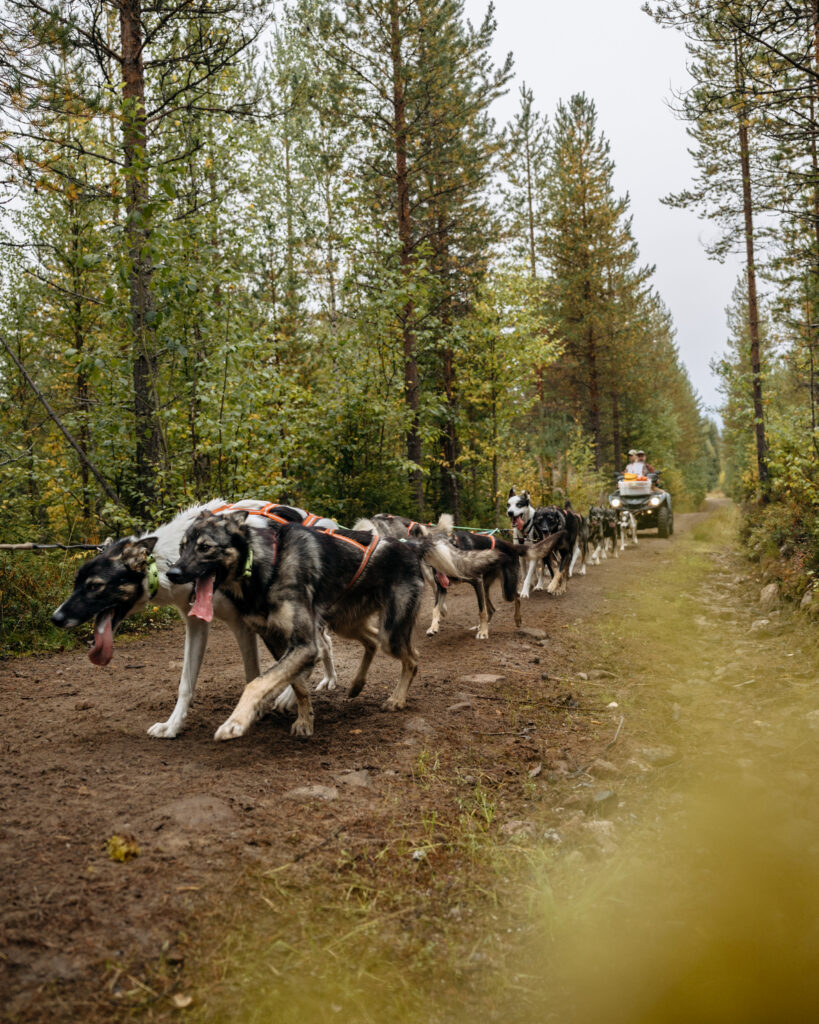
We hook the dogs to a quad bike, put it in gear, and let engine compression create resistance. After a short warm-up, I cue them to pull at maximum effort. I want to see them explode into their harnesses so hard their bellies nearly scrape the ground.
The moment I feel that effort fading, I stop the team. We let them recover, pant, bark, and recharge. Then, when they’re ready, we do it again.
This interval style builds muscle and explosive strength while keeping dogs safe from overheating. Mentally, it teaches them that hard work moves the team forward and because they never fail, it builds confidence.
Mid autumn: The power pyramid
When temperatures drop a little further, but not quite enough for long continuous runs, we move into the power pyramid.
Here, the focus shifts from pure explosiveness to duration. We structure intervals like this:
1 minute pull / 4 minutes rest
2 minutes pull / 3 minutes rest
3 minutes pull / 2 minutes rest
4 minutes pull / 1 minute rest
…then back down again.
In a 30-minute session, the dogs may only pull for 15 minutes, but those minutes are intense. The pyramid gradually challenges them to sustain strong effort for longer stretches while still giving enough recovery to prevent overheating.
Late autumn & winter: Continuous training
Once it’s cold enough, generally below +5 to +10°C, we can finally switch to continuous pulling.
Here the focus is on rhythm, teamwork, and endurance. Runs gradually extend to 5, 10, 15, even 20 kilometers or more, depending on the team’s purpose. Intensity is lower than in autumn intervals, but duration is higher. This is the foundation for both long-distance races and winter tours.
Special variations: Swamp training
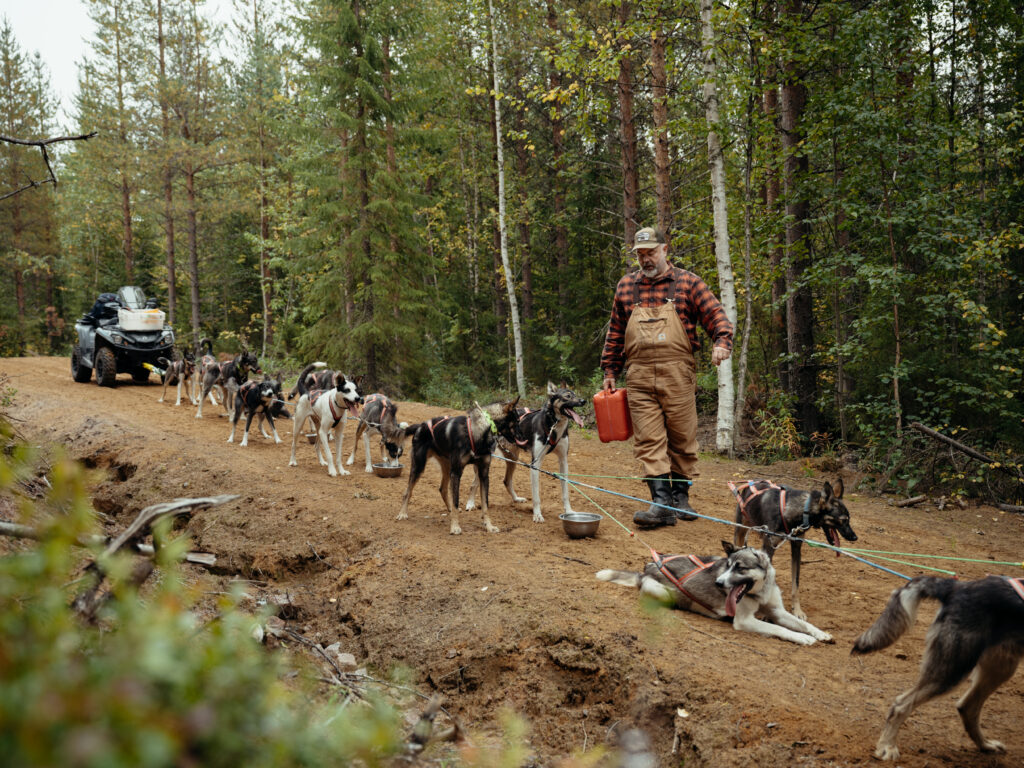
Occasionally, we mix things up with swamp training. Dogs pull a cart through mud and water, which creates huge resistance. It’s physically demanding, forcing them to use strength, coordination, and balance. But because they stay wet and cool, the risk of overheating is minimal.
It’s a great way to build power and toughness in a safe, novel environment.
The guiding principle
The logic is always the same: The warmer it is, the shorter and more intense the sessions. The colder it is, the longer and steadier the sessions.
By tailoring training to conditions, we build fitness step by step, prevent overheating, and make sure the dogs finish every run strong, confident, and eager for the next one.