The year of the pup: Yearlings, first work, and the dog they become
By the time our young dogs reach twelve months, they have already learned a lot.
They have gone from milk-drunk newborns to wobbling puppies, from sharp-toothed chaos machines to young dogs who know collars, leashes, forest walks, trailers, adults, harnesses, stakeouts, and maybe even their first short runs in front of a sled.
After that first winter, we no longer really call them puppies.
Now they are yearlings.
And this is where the final part of our puppy series begins.
Not the end of training. Not even close. But the stage where everything they have learned starts to come together.
12-24 Months: Not puppies, not adults
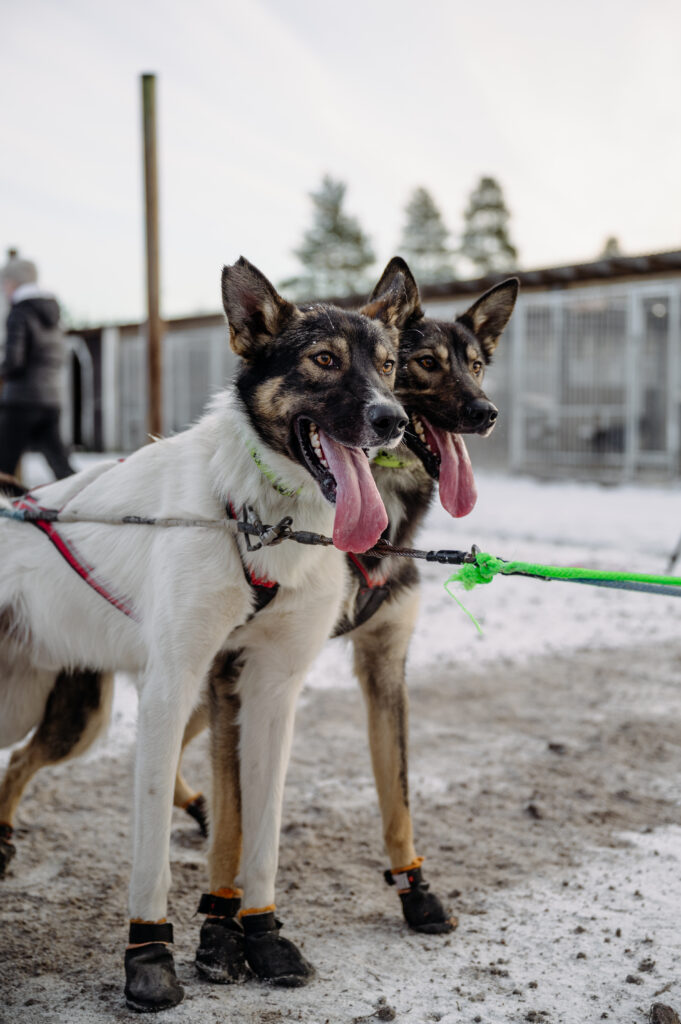
Yearlings are sort of in-between dogs.
They are not babies anymore, but they are not fully mature adults either. They may look strong. They may run beautifully. They may already seem to understand much of the work.
But they are still developing.
Physically, mentally, socially – they still need time. This is why we do not simply throw them into the adult schedule and expect them to handle it. The second year of life is about building confidence, experience, and maturity without crushing the joy.
If their first short pulling experiences went well, they should now think sledding is one of the best things ever invented. That is exactly what we want.
If a young dog finishes their first winter excited, proud, and wanting more, then the first stage of training has succeeded.
Summer as yearlings: Social skills and maturity
After that first winter, summer is not about hard work. Summer is about bonding, social learning, and growing up.
The yearlings are slowly mixed into different adult groups. Many have already moved to live with adult dogs. This helps them learn the normal rhythm of kennel life outside the puppy group.
Adult dogs continue teaching them social skills. Not in a dramatic way, usually. More in the daily details: how to share space, how to greet, how to settle, how to play without becoming annoying, how to respect another dog’s mood.
These lessons matter.
A sled dog does not only work in a team. They live in a community. The better their social skills, the easier and happier their life will be.
Behavioural training does not stop
Even though they are yearlings now, we still work on the basics.
Leash training, doors, eye contact, calming down, waiting, walking in controlled groups, coming when called, following human body language.
These are not “puppy lessons” that get ticked off a list and forgotten. They are life skills that need refreshing, especially during the teenage stage when some dogs briefly appear to lose their entire brain.
This is normal.
Deep breaths.
It usually passes.
But only if the routines stay consistent.
Controlled walks and focus
Yearlings can still go on forest walks, but the focus is different from the early puppy walks.
With young puppies, the goal is discovery and basic human focus. With yearlings, the walks may need more control. They are faster, stronger, and more independent. If they decide to make a poor choice, they can make it at impressive speed.
So we keep the same foundation: pay attention, check in, follow the human, do not assume you know the plan.
The teenage brain loves predictability when it benefits them. So we continue to keep them thinking.
Autumn: Back into training
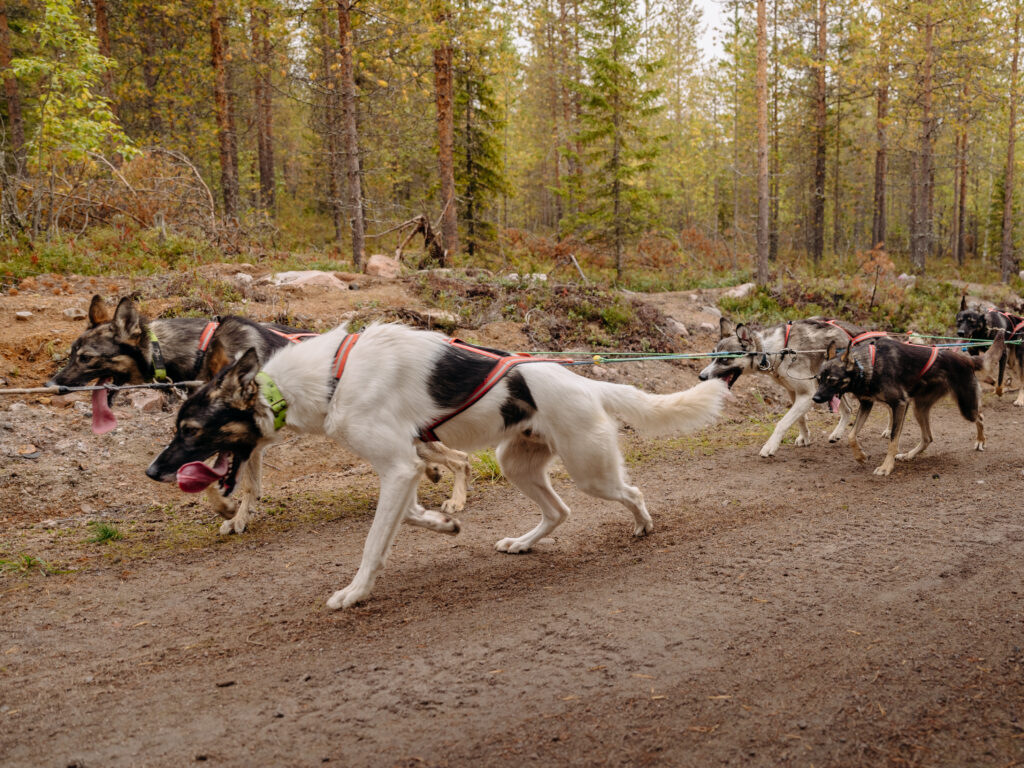
In autumn, training becomes more serious.
The yearlings begin working in front of the ATV. Now they are no longer just learning equipment or doing tiny first introductions. They are beginning to practise real adult sled dog skills in a structured way.
They learn passing, they learn head-on passing, they learn checkpoint routines, they learn stopping and waiting, they learn to work around other teams, they learn that excitement still needs a brain attached.
This is also when we begin watching for potential leaders.
Not every dog needs to lead. A good team needs many kinds of dogs: confident leaders, steady team dogs, strong wheel dogs, calm teachers, energetic workers, and dogs who simply love to run in the middle of the group.
But some yearlings begin to show something extra. Focus. Confidence. Curiosity. A willingness to go forward when things look uncertain. The ability to listen while still moving ahead.
Those dogs may have leader potential.
We do not force it. We observe, encourage, and give opportunities.
First working season – With limits
The winter after they become yearlings is their first real working season.
But that sentence needs a very important footnote. They are not working the same schedule as adult dogs.
This is where responsible training matters. A yearling may be enthusiastic, but enthusiasm is not the same as maturity. They still need shorter, carefully managed workloads. They need suitable teams. They need experienced handlers. They need time to learn without pressure.
Most importantly, they do not go in front of guest-driven sleds.
Only our experienced guides drive yearlings. That is not because guests are bad. It is because young dogs need someone behind them who can read what is happening, make adjustments quickly, and protect the experience.
A yearling’s first working season should build confidence, not stress.
What they learn in that first season
During their first working winter, yearlings learn more than pulling.
They learn the rhythm of a working day, they learn how to wait before a run, they learn how to settle after a run, they learn that not every exciting thing needs a reaction, they learn how to recover, they learn how to work beside different dogs, they learn that guides are part of the team.
A good first season is not measured only in kilometres. It is measured in attitude.
Does the dog still want to go?
Does the dog recover well?
Does the dog stay confident?
Does the dog understand more at the end of the season than at the beginning?
Does the dog finish the winter still loving the job?
That is what matters.
Health routines as they grow up
By this stage, the yearlings are moving into adult health routines.
Deworming follows the adult schedule, usually twice a year. Weight and body condition are monitored like with the rest of the kennel. Teeth, paws, nails, hydration, skin, movement, harness fit, and overall condition remain part of normal care.
The difference now is that we are not just watching puppy growth. We are watching how a young working dog develops.
Do they hold their body condition well?
Do they need more food?
Do they recover easily?
Do they get stiff?
Do they move smoothly?
Do they stay mentally happy in their work?
This is where all the earlier handling pays off. A dog who has been touched, weighed, checked, transported, and trained calmly from puppyhood is much easier to care for as a young adult.
Why we train for life, not just work
One of the most important things about our puppy programme is that it is not only about making sled dogs.
Of course, we want them to become good sled dogs, even great sled dogs. That is their work, their joy, and their heritage. But we also want them to become dogs who can handle life in general.
A Bearhill dog may one day need medical treatment, they may need to travel, they may need to change groups, they may need to slow down, they may retire into a home, they may become someone’s sofa dog, hiking partner, or old grey-faced shadow.
The skills we teach early help with all of that.
Name training, handling, leash walking, doors, travel boxes, trailers, vet room visits, waiting, calming down, socialising with people and dogs – these are not separate from sled dog training. They are the foundation underneath it.
A good working dog is still a dog. And a dog’s life is bigger than work.
The End of the Puppy Series
So, when does the “year of the pup” end?
In one sense, after the first year. In another sense, not until after that second winter, when the young dog has begun to understand the working life and is moving toward adulthood.
But really, the foundation built during these two years stays with them forever.
From the first daily weighings to the first forest walks, from soaked puppy food to adult meals, from tiny collars to harnesses, from puppy land to adult groups, from wobbling outside the doghouse to running in a team, from chaos to confidence.
Not perfectly, of course. Puppies make sure of that.
But step by step, they become dogs who understand us, trust us, and want to work with us.
That is the point of the whole process.
We are not trying to rush them into work. We are not trying to create perfect little robots. We are not trying to prove how much a young dog can do. We are trying to raise dogs who are healthy, brave, social, focused, and happy.
First trust.
Then focus.
Then confidence.
Then skills.
Then work.
A good sled dog is not just born. A good sled dog is raised.