Why sled dogs wear booties (and why mushers go through thousands every year)
Today we want to talk a little about booties – those small pieces of fabric that sled dogs often wear on their feet. They might look simple, but for a musher, they’re an essential tool to keep dogs running healthy, strong, and happy.
From Workhorses to Racing Dogs
Back in the old days, sled dogs were large, tough, furry animals – true beasts of burden, bred to survive harsh winters and endless work. Their feet were like leather: strong enough to handle deep snow, sharp ice, and frozen trails with little problem.
But as sled dogs transitioned from survival and freight work into racing, their physiology changed. Breeding shifted toward speed, endurance, and drive. Something had to give – and often, that was the toughness of their feet.
Now, imagine the Iditarod: 1,000 miles on snow. Each foot will strike the ground roughly one million times. That’s one million chances to step on a sharp crystal, catch a rock, or wear down a pad. Feet are both incredibly resilient and incredibly vulnerable at the same time.
Snow Isn’t Just Snow
Most of a sled dog’s work happens on snow, but snow is not always the same. Its texture and effect on paws change with the weather.
- Cold snow can become sharp and abrasive, like running on sandpaper.
- Wet snow clumps quickly, sticking to the fur between toes.
- Fluffy snow in extreme cold forms ice balls inside the paw pads, sometimes as big as marbles or even golf balls.
Try running a marathon with a stone in your shoe, and you’ll understand why this is a problem.
And that’s not even mentioning autumn training, when dogs run on gravel roads, rocky forest paths, or sandy tracks long before the first snow arrives.
The Role of Booties
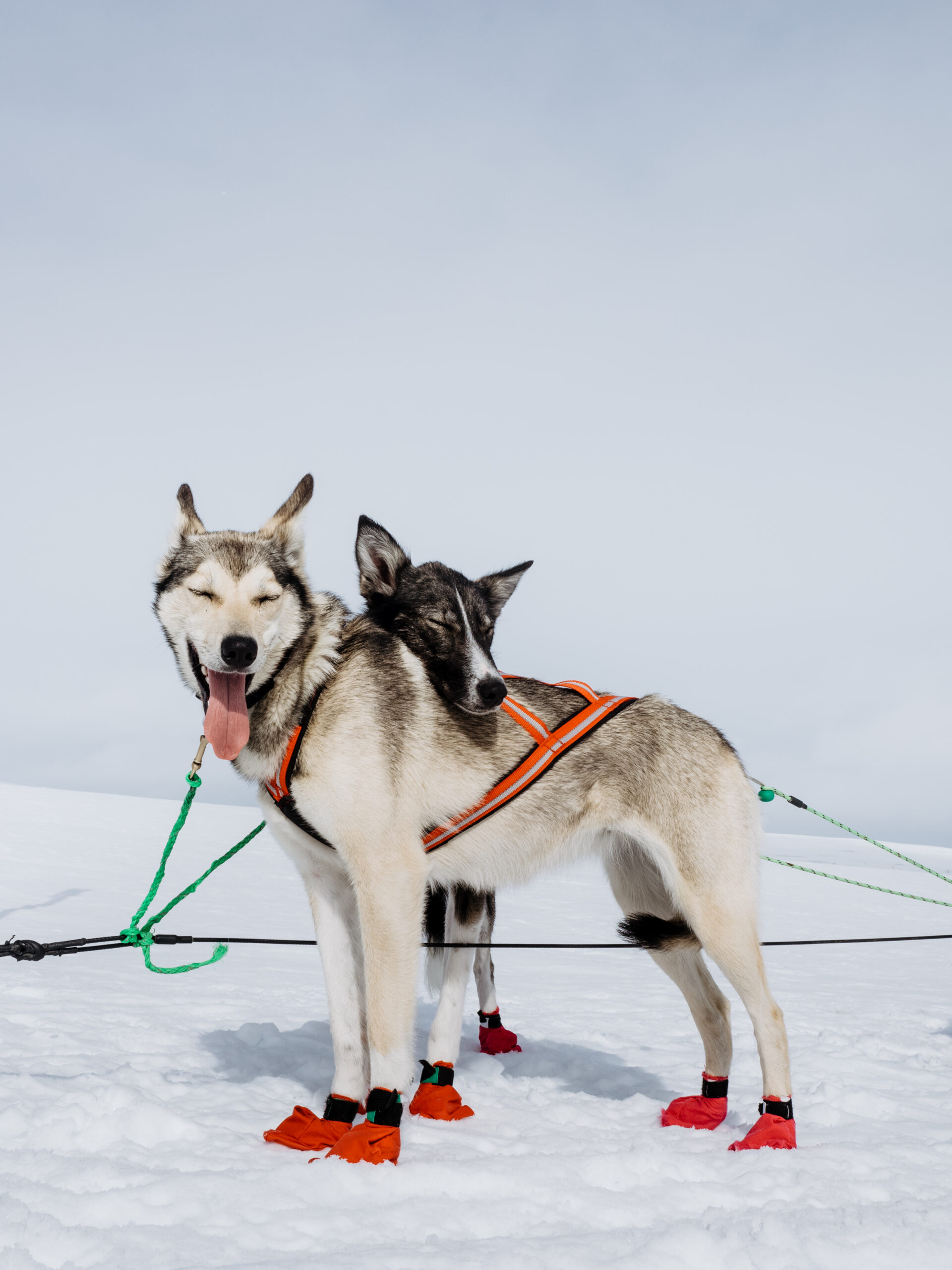
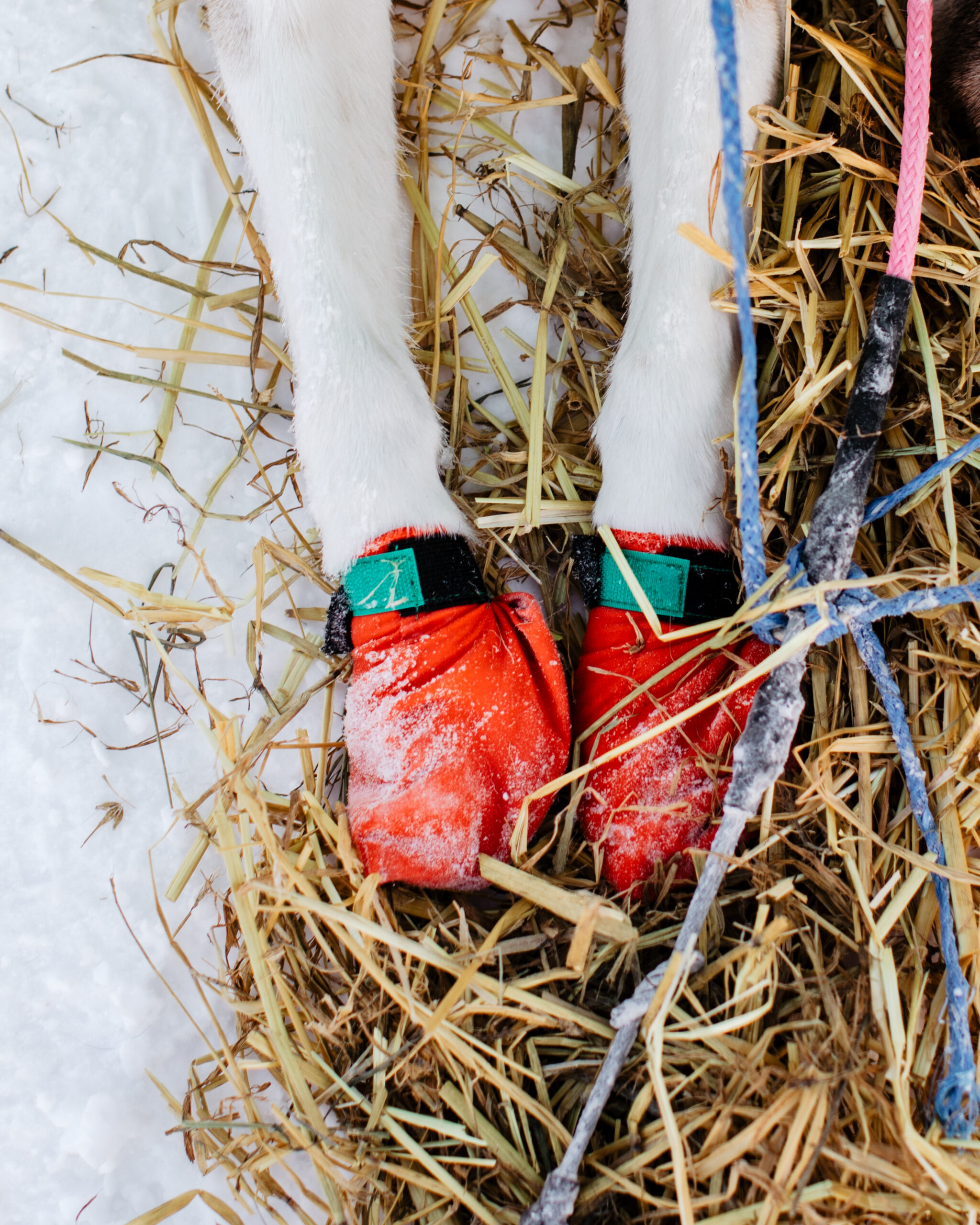
This is where booties come in. Contrary to what many think, they’re not meant to keep paws warm. They’re a protective barrier between the dog’s feet and the surface they’re running on.
- In winter, booties prevent snow abrasion and stop ice balls from forming between toes.
- In autumn, heavier-duty booties protect against gravel, rocks, and road surfaces.
- If a dog has a minor paw injury – a scratch, a crack, or a sore pad – a bootie combined with ointment allows the dog to keep working safely, much like a human might use a bandage on a blister.
Materials and Practicalities
Booties are usually made of Cordura nylon, a tough but flexible fabric.
- Autumn booties are heavier (500–1000 denier).
- Winter booties are lighter and more flexible (around 300–330 denier).
They are essentially disposable gear. No matter how strong the fabric, they will eventually wear out, fall off, or get chewed. And when that happens, it’s better to lose a one-euro piece of nylon than an expensive custom-made item.
In our kennel, we use 5,000–10,000 booties per season. At around €1 each (up to €2 for heavy-duty versions), this adds up to nearly €10,000 in booties every year.
Mushers even have a running joke: you can tell the quality of someone’s booting skills by how many booties their dogs manage to fling off in the first few hundred metres of a run. Finding lost booties along the trail is almost a winter sport in itself.
Using Booties in Practice
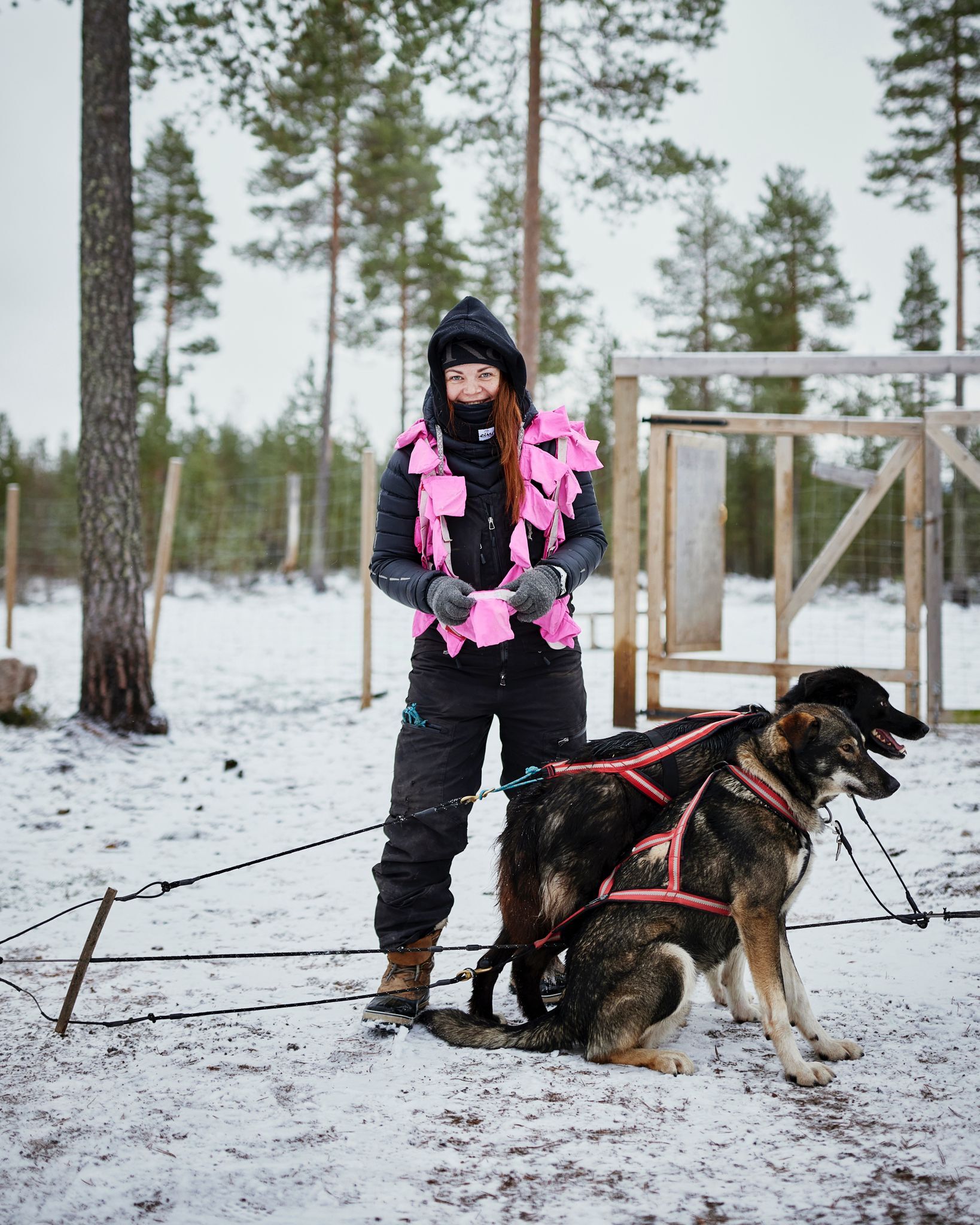
Booting a dog takes time, patience, and a strong back. Some teams need booties on all four feet; others only on the front or back. It’s part of the musher’s craft, learned over time.
And while some dogs still have the old “iron feet” of their freight-dog ancestors, most racing and tour dogs rely on booties to keep them healthy through thousands of kilometres of running.
Because in the end, a sled dog’s feet are its most valuable asset – and protecting them is protecting the dog itself.