Who’s the Boss? The Alpha Theory Myth!
One question we get asked a lot at the kennel is, “Who’s the alpha?” People are often convinced that in every dog group, there has to be a boss dog, a dominant male and female calling the shots, keeping everyone in line. But the truth is: there is no alpha. And when people ask who the alpha is, I usually answer, “Hopefully me, or one of our handlers!”
The idea that there must be a dominant alpha dog ruling the pack is based on what’s known as the alpha dominance theory – a concept that has long been disproven but somehow refuses to die. And like all persistent myths, this one has quite a story.
The origin of the myth
It started (as many stories do) in Nazi Germany. A man named Konrad Lorenz, a card-carrying member of the Nazi party and firm believer in the mystical cult of the wolf, was one of its main proponents. He believed in the need for a strong leader, just like wolves supposedly had. After the war, like many German scientists, Lorenz ended up in the United States. There, he needed to justify his role and status, so he turned to biology and behavioural science, studying wolves in captivity.
In the early 1950s, tracking wolves in the wild was impossible – no helicopters, no radio collars – so Lorenz gathered unrelated wolves from various sources (zoos, animal control, etc.) and placed them together in a fenced area. Naturally, chaos followed. There were fights, aggression, and a pecking order was established. The biggest male and female dominated access to food and space, and Lorenz documented it all. He published his theory, calling it the alpha dominance model. It became hugely influential, and he even received a Nobel Prize for it.
How a wolf pack really operates
But there were problems. Even at the time, some scientists raised concerns, noting that the wolves he observed weren’t related and were under extreme stress in an unnatural environment. But science is always evolving. As radio collars and better field observation became available, researchers could finally study wolves in the wild.
What they found was radically different.
In the wild, wolves aren’t constantly fighting for dominance. They live in family units—parents, children, sometimes grandkids. The hierarchy is fluid and based on experience, not brute strength. The breeding pair (what Lorenz called the “alpha”) are just the parents. If a younger wolf isn’t happy, it simply leaves and finds its own territory. Wolves defer to the most experienced individual in any given situation: Hunting large prey? Follow the best moose hunter. Chasing rabbits? Let the quick one lead. It’s cooperative, not authoritarian.
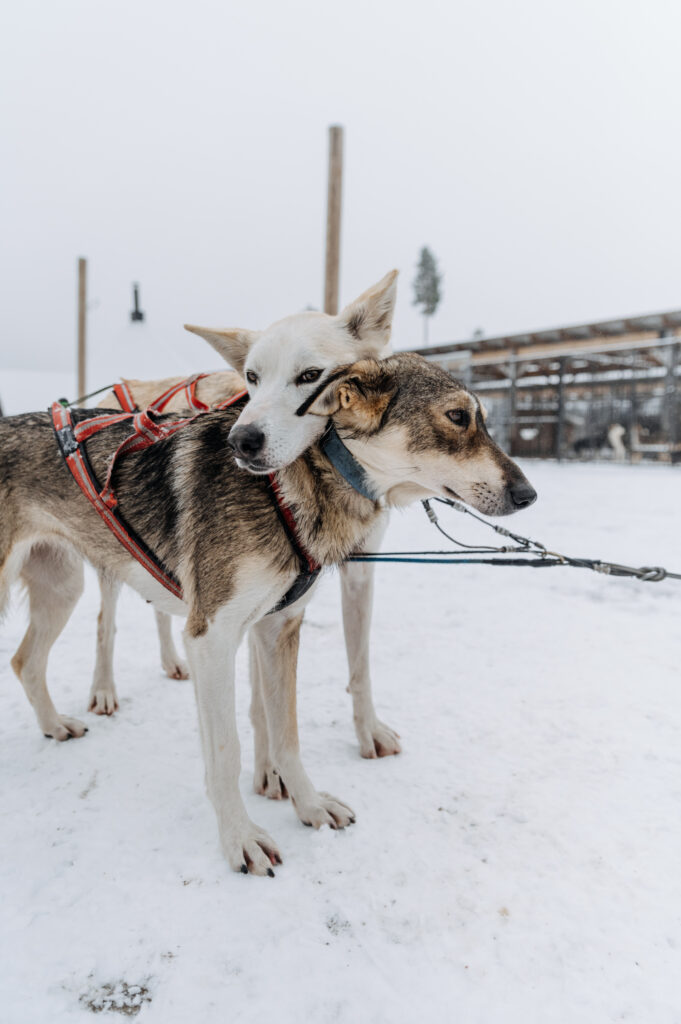
So what does this mean for us as dog handlers?
It means that anyone trying to be the “alpha” of their dog pack by using dominance and aggression is misunderstanding how dogs (and wolves) actually operate. The outdated idea that you must “show your dog who’s boss” by eating before them, walking through doors first, or physically dominating them has caused untold harm.
Yes, dogs need structure. They thrive with clear rules, consistent routines, and fair leadership. But leadership isn’t about intimidation. It’s about providing what matters to them: food, safety, companionship, exercise, and boundaries. Just like a parent does for their child.
We are the leaders because we provide for them not because we’re stronger or more aggressive. And the science backs this up. Even Lorenz himself admitted later in life that his theory was wrong, once better research proved otherwise.
Unfortunately, the idea of dominance lingered in the dog training world far longer than it did in scientific circles. While behaviourists moved on, trainers and dog owners clung to the myth. It shaped decades of training practices, many of which were needlessly harsh or even abusive.
Thankfully, we’re now seeing a shift. More and more people are recognising that dogs aren’t trying to dominate us. They’re just trying to figure us out. If we provide what they need with kindness, clarity, and consistency, they’ll follow us willingly – not out of fear, but out of trust.
So, no, there is no alpha dog in our kennel. The leader of the pack is whoever holds the leash, fills the food bowl, and earns the trust of the dogs through fair, consistent care. That’s the real top dog.