When weather changes the plan: The sales side of husky tours
One thing we have learned over the past few winters is that nature does not read our booking calendar.
We can prepare the dogs, check the trails, build the schedules and have everything looking good on paper. Then the weather changes. Too little snow, sudden rain, hard frost, icy ground, unsafe trails, all of it can affect how we are able to operate tours. Sometimes it affects if we can operate them at all.
For the guests, this can be disappointing. For us, it becomes a puzzle of safety, logistics and communication. From the sales side, our job is to help turn a difficult situation into something as clear, fair and manageable as possible.
That is not always easy. But the past years have taught us a lot.

When a problem becomes an idea
I started working at Bearhill in autumn 2022, and very early on I got a good introduction to what weather can do to a husky operation.
That winter, the frost came early, but we were not yet able to start regular sledding at our Santa’s Husky Rides location in Santa Claus Village at the beginning of December, due to the lack of snow. Luckily, the lake at our main kennel had already frozen.
Instead of cancelling everything, we arranged bus transfers from Santa Claus Village to our main kennel. Guests who had booked a shorter ride ended up getting a much bigger experience: a husky ride on the frozen lake, a kennel tour, and more time with the dogs and guides.
For the guests, it was a substantial free upgrade. For us, it became something more than a temporary solution.
That experience helped create the idea for longer musher-driven tours with more interaction and information. The following season, this developed into the Musher Tours we still run today.
So yes, the situation started as a weather problem. But it also led to something useful, a new kind of tour and another layer of flexibility in our operations.
When there is no perfect option
Two seasons later, in December 2024, we faced a very different situation.
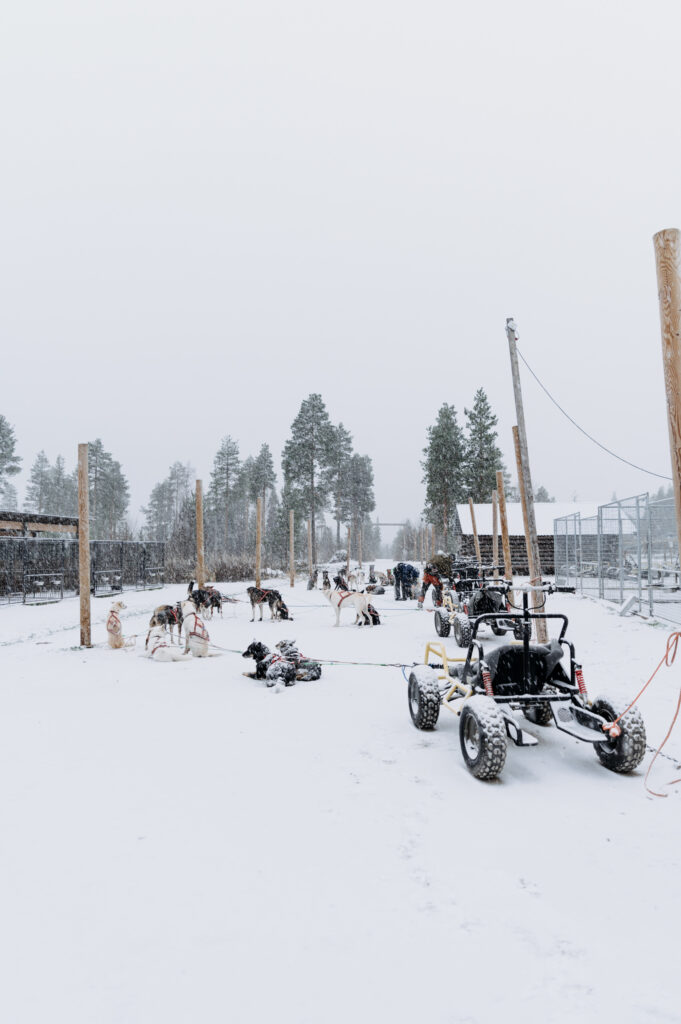
The winter had started with very little snow as before, but there seemed to be just enough for sled tours at the beginning of December, but then heavy rain arrived during the weekend just before the month began. The conditions changed quickly, and it became clear that allowing guests to drive sleds or even carts themselves would not be safe.
On Monday, we had to fully cancel the day. The kennel was more or less an ice-skating area after the water froze.
From the following day, we rebuilt the schedule. Self-driven tours were changed into musher-driven cart tours where possible. Guests who had booked the musher-driven Running with the Pack tour were offered shorter ride options combined with a kennel tour. Everyone also had the right to cancel and receive a refund if the changed tour no longer suited them.
Looking back, it was not a perfect solution, which we have now majorly improved upon. In many ways, no one got exactly what they had originally booked. But under the circumstances, it allowed us to remain partly operational while keeping safety as the priority.
From the sales side, it was a stressful week and the work continued afterwards with messages, changes and refunds for almost a whole month. But it also gave us one of the clearest lessons so far: in weather disruptions, communication is not separate from operations. It is part of the operation.
What we learned about communication
If a tour changes, guests need to know about it early enough to make decisions.
No one wants to receive difficult news during their holiday. But if we need to change, shorten or cancel a tour, it is much better to explain that clearly and as early as possible. Waiting too long can create confusion for guests and a much bigger workload for everyone.
Since then, we have put more thought into how we communicate before and during weather-related disruptions. Our main goals are now quite simple:
We aim to make major weather decisions as early as possible, ideally no later than 13:00 o’clock on the day before the tour. In very clear cases this is done days in advance.
We try to keep communication honest and clear, so guests understand what has changed and why.
We try to keep the original schedule as intact as possible, because guests often have full holiday plans around their tour.
And when the changed experience is no longer what the guest wants, we keep the cancellation and refund options clear.
These points sound simple, but they matter a lot when the situation is developing quickly.
Why decisions are not always immediate
One challenge is that trail and weather conditions are not always obvious from a weather forecast.
A forecast might show snow, but the actual trail may be icy underneath. There might be water on the route, poor grip for the sled, unsafe braking conditions, or a yard that is too slippery for guests and staff. At times the weather forecast shows -35 degrees for a certain day and on the day itself it’s actually only -25 degrees. Sometimes the only way to know is for the operations team to physically check and test the conditions.
That means we cannot always give an instant and definitive answer, even when we know guests are waiting.
We understand that this can be frustrating. It is frustrating for us too. But when the decision concerns safety, it has to be based on operational soundness and not guessing.
The sales team as the bridge
In normal circumstances, sales is about helping guests choose the right tour, answering questions and keeping bookings organised. In a difficult weather situation, the role changes.
The sales team becomes the bridge between operations and guests. Operations tell us what is safe and possible. We know what the guests have booked, they will tell what their schedule allows, and what they may decide to do.
Our job is to bring those two realities together as calmly and clearly as possible.
Sometimes that means offering an alternative. Sometimes it means explaining why a self-driven tour can only be run as a musher-driven one. Sometimes it means saying that the safest and fairest option is a cancellation and refund.
It is not always a comfortable message to send. But it is better to be honest than to promise something we cannot safely deliver.
Still improving
We are currently reviewing what we have learned over the past years and working with our operations team to update our weather protocol, to have more operational plans based on which age demographic the customers on the departure are.
Of course, we hope we will not need to use it often. We would much rather have stable winter conditions, safe trails and tours running exactly as planned.
But hope is not a protocol.
So we prepare. We improve our internal communication, our decision-making process, our guest messages and our alternatives. Not because we expect things to go wrong, but because we know that sometimes they do.
Weather-related changes are never our first choice. They are not what guests hope for, and they are not what we hope for either. But when nature gives us a different set of rules, our responsibility is to respond safely, honestly and fairly.
Sometimes that means a changed route. Sometimes it means a different type of tour. Sometimes it means cancelling.
And sometimes, as we learned in 2022, a difficult situation can even lead to something new and better.
That is life in a husky kennel. We work with dogs, people and weather and none of them can be controlled completely.
But we can control how we respond.
Thanks for Coming Along
This brings my little blog series to an end, so thank you for indulging me while I took you away from dogs, trails, and sleds for a moment to talk about sales.
It may not be the loudest part of the kennel, but it is one of the places where a guest’s Bearhill experience begins.
More dog stories will follow soon enough, I promise!
— Teemu
Sales Operations Manager, Bearhill Husky