How to choose a responsible kennel for your husky tour in Rovaniemi
People often ask us: “Where can I find the most ethical husky safari in Rovaniemi?”
It’s a good question. Actually, it’s probably the most important question you can ask before booking a husky tour.
A husky safari is not just a ride through snowy forest. There are living animals in front of the sled, people caring for them behind the scenes, and a whole kennel system that should work every day of the year, not just when guests arrive with cameras.
Another musher, Sanna Setälä, has made a very informative instagram post about this a while ago. Additionally to her points, here are our tips what to look for.
1. Choose a kennel that is open about its dogs
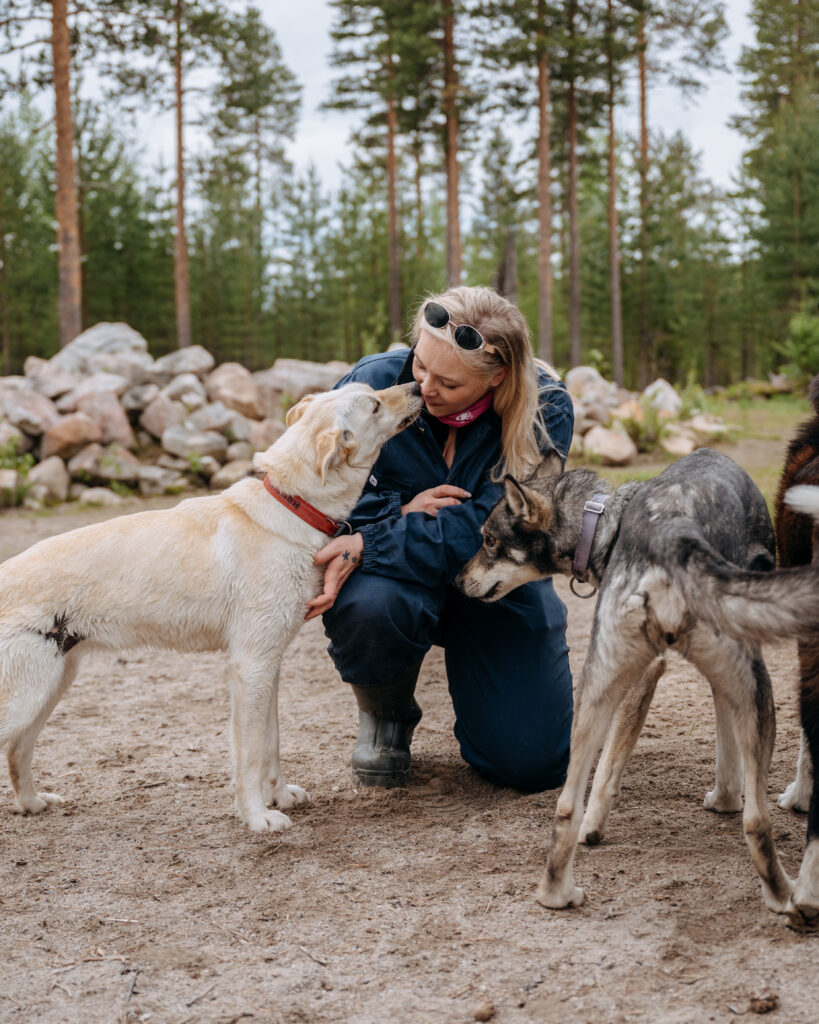
A responsible kennel should be able to show and explain how the dogs live, train, rest, eat, work, and retire.
At Bearhill, we believe in an open kennel concept. There should be no hidden corners. Guests should be able to see what we do with and for the dogs, and our tours are meant to be educational moments as well as enjoyable experiences.
That matters. A good husky safari should leave you thinking not only, “That was fun,” but also, “Now I understand these dogs a little better.”
2. Ask about the dogs’ whole life
The safari is one small part of a sled dog’s life. The real question is what happens before and after the tour.
- What happens in summer?
- What happens when a dog gets old?
- What are the kennel’s breeding policies?
- What happens to dogs who can no longer run?
At Bearhill, we do not breed puppies just for display. We breed when the kennel needs rejuvenation, and we believe older dogs deserve a comfortable retirement. Whether that means staying with us, helping train younger dogs, joining smaller recreational teams, or moving into suitable pet homes.
This is also why our no-kill policy matters. We do not put down healthy dogs because they are old, slower, retired, or no longer productive. Dogs that can no longer work either stay with us or are rehomed into loving homes where they can enjoy a new chapter.
That is not the easy way to run a kennel. But it is the right way.
3. Be careful with “ethical” as a marketing word
Everyone can write “we love our dogs” on a website. The more useful question is: what systems are in place?
Animal welfare organisations have raised concerns about weak oversight and poor welfare in parts of the Finnish sled dog tourism industry, so guests are right to ask more detailed questions before booking.
A responsible kennel should have written standards, trained staff, safety routines, dog records, veterinary care, and a culture where concerns are noticed and acted on.
At Bearhill, our Code of Conduct is built around three pillars: safe guest experiences, proactive animal welfare through attentive training and care, and a supportive workplace for staff. It also states clearly that no dog should be asked to work if sick, injured, or unfit.
Good intentions are nice. Good systems are better.
4. Check what happens when conditions are not right
One of the clearest signs of a responsible husky kennel is whether they are willing to change or cancel a tour.
Not enough snow? Trails too icy? Weather too cold? Conditions too warm for the dogs?
A responsible operator does not just push through because guests have booked. At Bearhill, guest safety and dog wellbeing come first, and tours may be adapted, shortened, changed to carts, or cancelled when conditions require it.
This can be disappointing in the moment. We understand that. People travel far to experience Lapland. But responsible animal tourism means the dogs do not pay the price for our expectations.
5. Look for outside standards, not just nice photos
Certifications are not magic. They do not mean a company is perfect. But they do show that a kennel has committed to outside criteria and continuous improvement.
The University of Lapland has noted that Finland’s Green Activities criteria include specific sled dog welfare questions, such as summer activity, retirement, unplanned litters, and employee wellbeing. Visit Finland’s Sustainable Travel Finland programme is also designed to help tourism companies adopt sustainable practices, with the label awarded to companies and destinations that complete the programme and meet its criteria.
Bearhill Husky holds both Green Activities and Sustainable Travel Finland recognition, along with other sustainability commitments.
Again, this does not mean the work is finished. Responsible tourism is never finished. But it does show direction.
So, where should you book an ethical husky safari in Rovaniemi?
The answer is relatively simple.
- Choose transparency.
- Choose year-round care.
- Choose proper retirement planning.
- Choose a kennel that does not use puppies as props.
- Choose written welfare standards.
- Choose a company willing to change plans when the weather is not right.
- Choose people who can explain not only the ride, but the life behind the ride.
And if those are the things you are looking for, then Bearhill Husky is the answer we can honestly stand behind.
Because for us, a husky safari should not just feel magical. It should feel right.
See you on the trail,
— The Bearhill Husky Team