Why Sled Dogs Wear Jackets
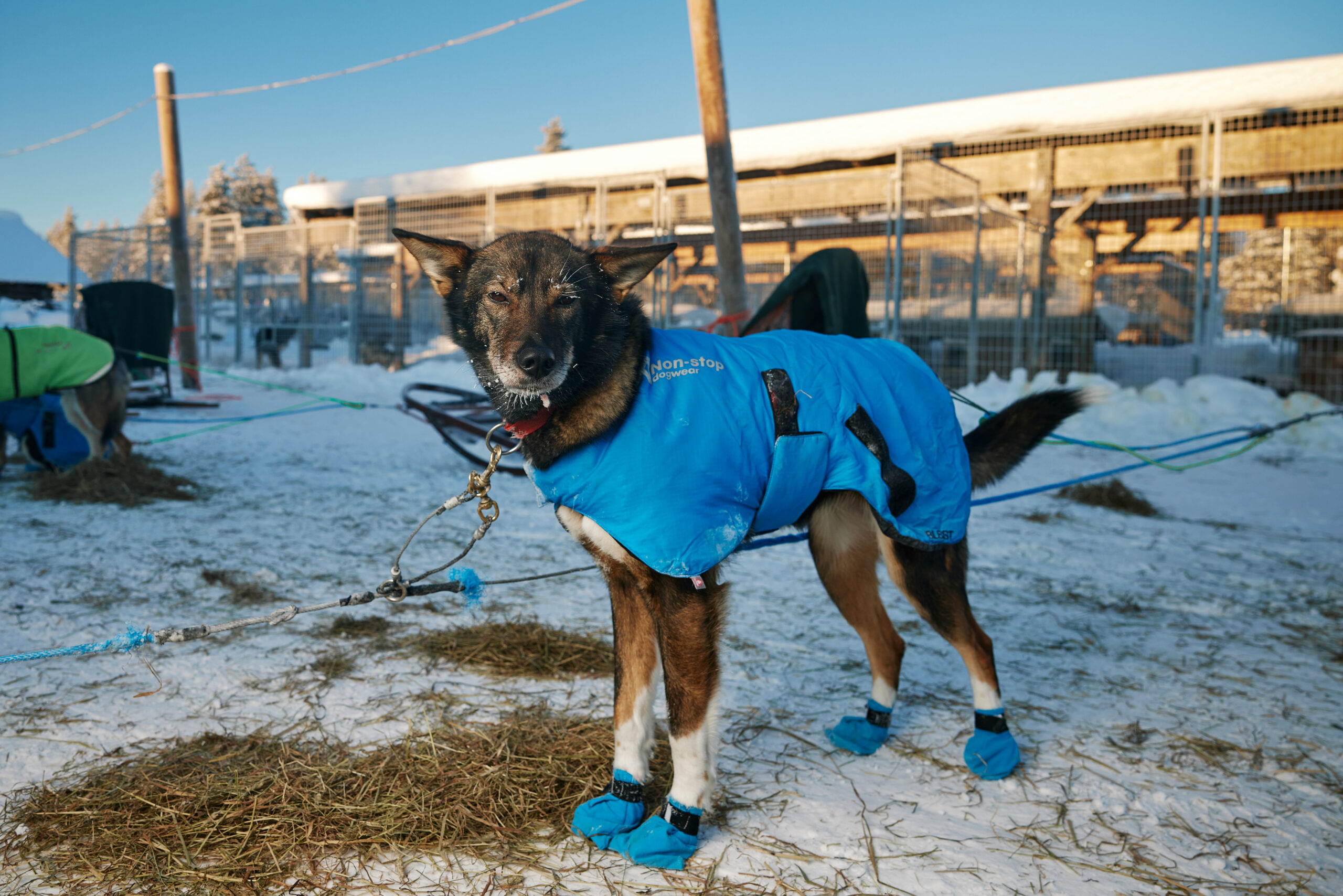
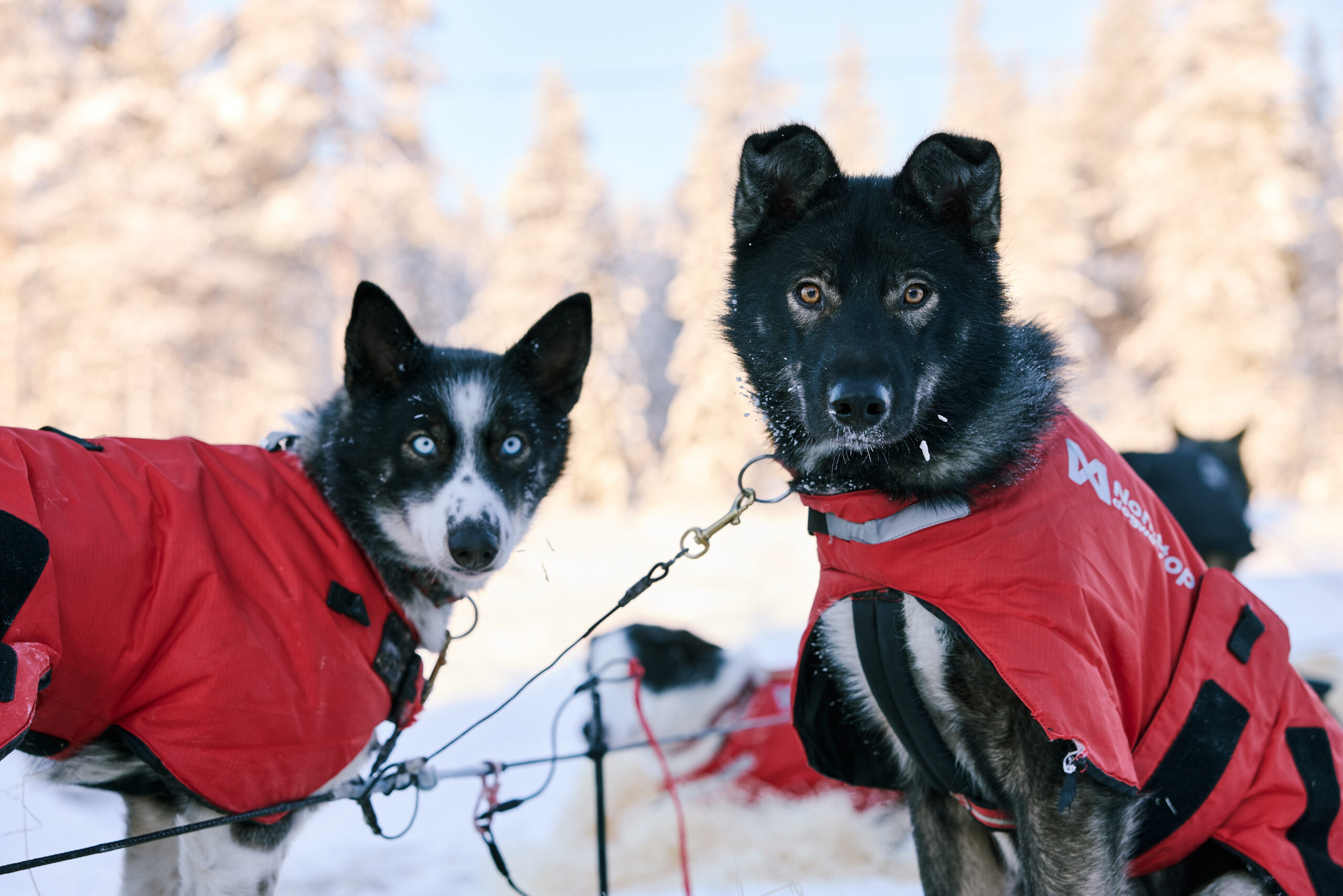
If you visit our kennel, or watch sled dog racing, you’ll notice many dogs wearing jackets. Your first reaction might be: “But they’re huskies – why on earth would they need jackets?”
It’s a fair question. Huskies are built for cold climates, but the truth is a little more complicated. While most dogs can live perfectly fine outdoors without jackets, we sometimes ask far more of them than just “getting by.” That’s where dog jackets come in.
Why Use Dog Jackets?
Our Alaskan Huskies work hard. They run long distances in snow, ice, wind, and freezing rain – or they pull heavy sleds full of guests on our tours. Not every dog has the same coat, and not every day brings the same weather.
On chilly, windy days, some dogs are less comfortable than others. Jackets help them retain body heat, keep their muscles warm, and prevent cold-related stiffness. A dog that feels comfortable works better and recovers faster.
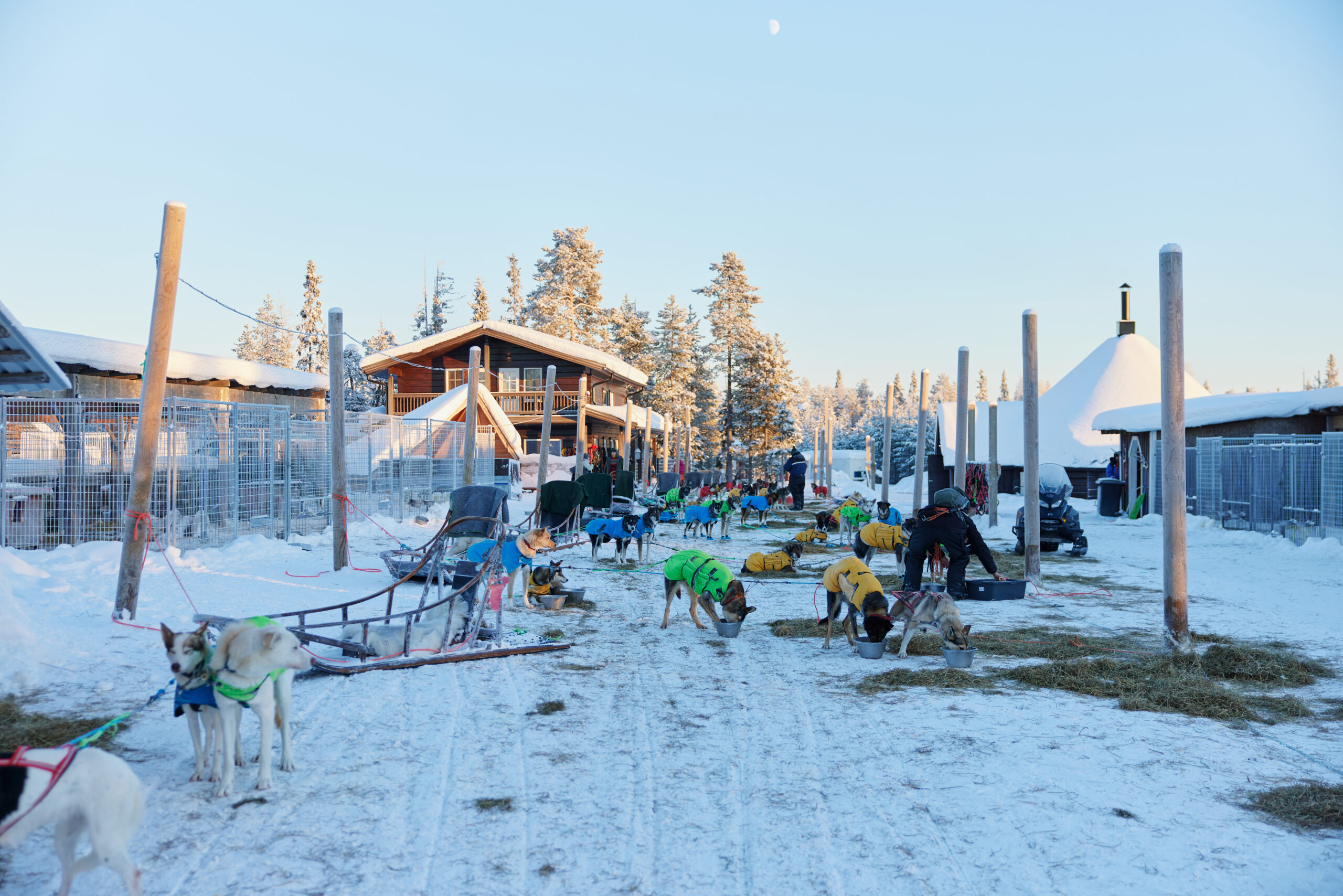
You’ll often see us jacket the whole team after a run. It’s the same principle as human athletes: between heats, sprinters throw on bathrobes or long coats to keep their muscles warm and ready. Jackets do the same for dogs, helping them recover if they’re going out again later in the day.
Jackets also serve as a mental signal. To the dogs, a jacket often means: “It’s break time. Relax until we’re ready to go again.”
Running Jackets vs. Camping Jackets
In general, there are two main types of dog jackets:
– Running (or wind) jackets
Thin and lightweight, designed to cut the wind and prevent heat loss while allowing full range of motion. They’re roomy enough so dogs can run comfortably and still take care of their basic needs on the trail. These are often made of wind-stopper or Gore-Tex–type fabrics.
– Camping jackets
Thicker, warmer jackets meant for use when dogs are resting at camp. They help dogs stay cozy during overnight stops or long breaks. On expeditions, I always bring camping jackets—because in a pinch, they can also be used as running jackets if the weather turns extremely cold.
Jackets and the Local Climate
People often imagine the Arctic as endless blizzards and howling winds. While that may be true on the coast or in the high Arctic, our climate here in Lapland is different. Summers are warm, autumns are damp, and winters, while snowy, are not always extreme.
For us, having dogs with super-thick coats would actually be a disadvantage, they would overheat during training and in the warmer seasons. Instead, we prefer dogs with lighter coats. On the rare days when it is bitterly cold, it’s far easier to put jackets on the team than to deal with overheating for half the year.
That’s why you’ll see our huskies wearing jackets more often than you might expect. It’s not about weakness, it’s about smart management of their health, comfort, and performance.